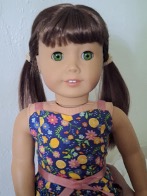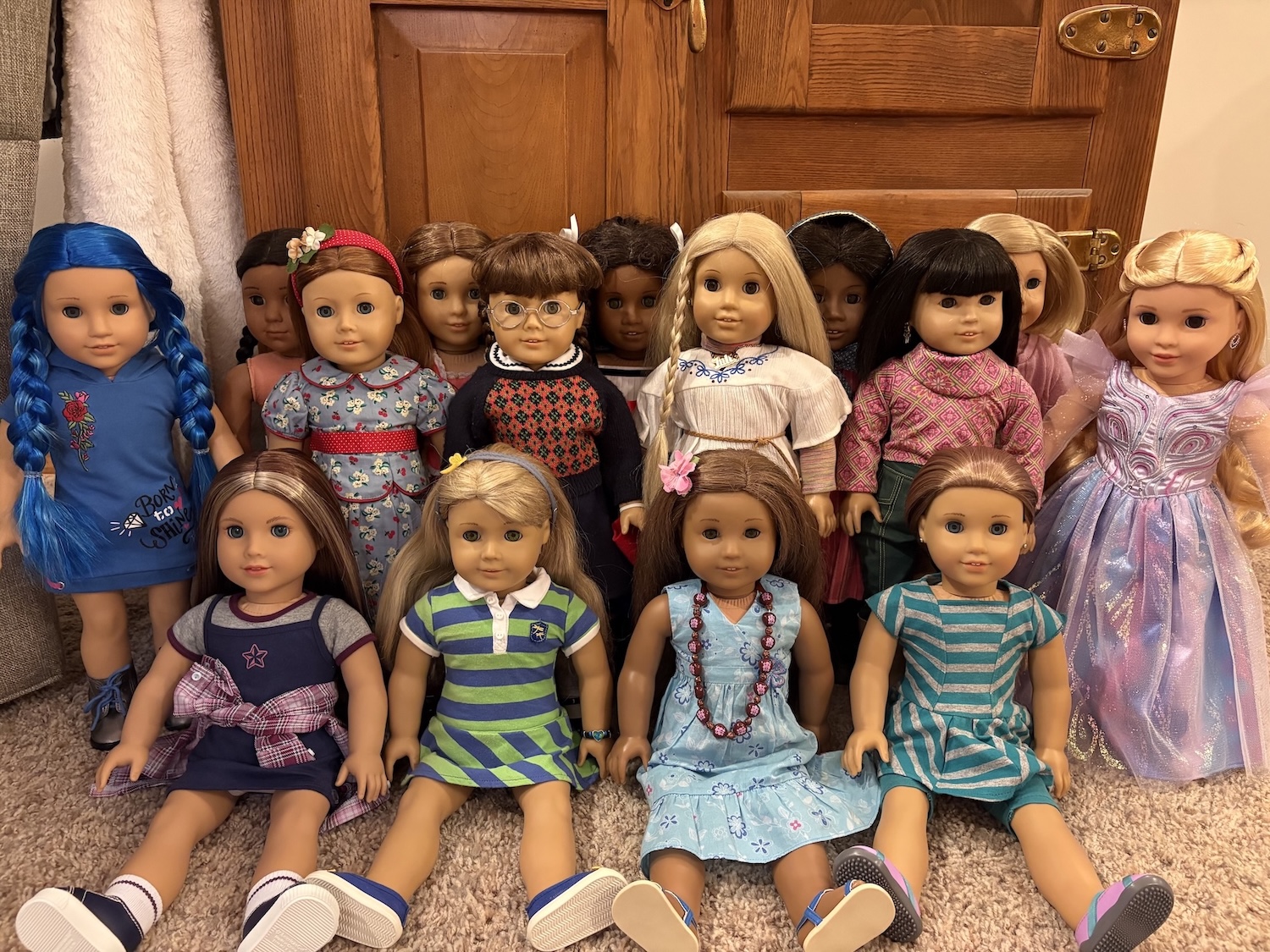
By Alivia Giles
Medill Reports
This year, when American Girl celebrates its 40th anniversary, hundreds of thousands of children and adult women will raise a tiny teacup to their 18-inch-tall friends. At $65, even when educator Pleasant Rowland introduced her first three dolls, and then $82 when toy giant Mattel acquired her in 1998, American Girl was always pricey. Now, still made in China, she is entering an era of high tariffs and a U.S. president who famously said children could have “two dolls instead of 30.”
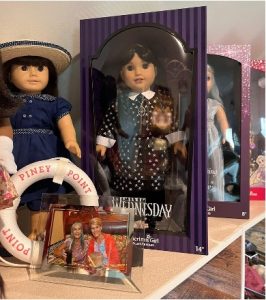
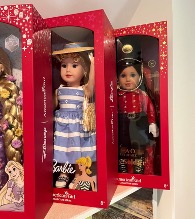
Most American Girl stores, once a popular destination for family vacations and birthday parties, are closing their doors. Stores are suffering with many consumers instead making their purchases online. Lately, Mattel has promoted limited edition collaborations with Disney, Barbie and Netflix’s hit series “Wednesday.” The brand doesn’t look quite like it did almost four decades ago. Yet some of American Girl’s oldest fans say the magic Rowland created almost 40 years ago is still alive in every doll.
“When it comes to strangers, most reactions range from ‘mostly uninterested, slightly puzzled’ to ‘intrigued and mildly entertained’ to ‘OMG! I love this, let me ask you questions and tell you about my own photography and/or the childhood dolls I had,’” said Marley Shaw, a 37-year-old collector who often walks around town with a doll.
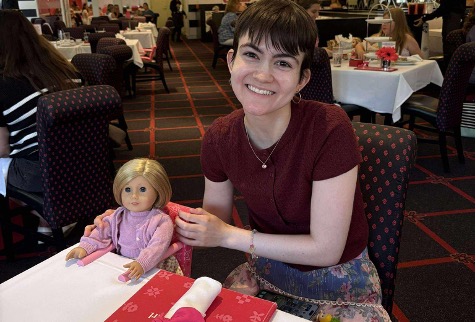
Shaw is just one of many adults who collects – and goes places with – American Girl dolls. Adult collectors are an ever-growing community with members ranging from nostalgic millennials looking to get back into an old hobby to women whose children have “grown out” of playing with the toys. With the exception of the limited-edition collector dolls, which come with more intricate clothing and accessories that sometimes feature Swarovski crystals, all of the AG dolls (Truly Me, historical line, playline Disney, Bitty Baby, AG Sisters and Wellie Wisher) are marketed primarily to children.
For Sarah Munson Accumanno, 29, the decision to bring a doll out comes down to logistics, rather than fear of judgment or criticism. But on some trips – like ones that involve visiting 18-inch friends – she decides a doll must come along for the ride.
“I’m usually too worried about losing a doll or her accessories to take any of them on outings, but I am planning to bring one of my girls with me when I go across the country to visit my best friend and her dolls!” she said. “The hard part is deciding who gets to tag along.”
Role of social media
Some American Girl collectors are influencers on social media platforms like Instagram, where they post doll photography and other content for – in some instances – thousands of “fans.”
Nearly 3,500 people follow Diana Moua, 44, the “doll-fluencer” behind @sonnetxgabriella on Instagram. Her love of American Girl began in 1991, when she was 10 years old and found the American Girl books at her local library and mailed in a card to receive a catalog.
“I wanted Felicity so badly – she had just been released,” she said. “I remember my brothers saying, ‘$82 for a plastic doll?’ And I said, ‘They are vinyl.’ Then they told me that’s just another word for plastic.”
That year, Moua received the Felicity and Molly dolls as gifts, along with a couple of outfits and accessories. When she moved out of her parents’ home, she left her dolls carefully packed away in a trunk. When her daughter was born in 2020, Moua decided to get her the Kanani doll along with a few accessories. She was immediately pulled back into the world of American Girl and met other collectors through Facebook groups. In February 2022, one of her fellow AG fans convinced her to start a doll Instagram account.
Other collectors use their personal social media accounts to casually connect with fellow collectors, rather than to create “influencer” content. Quinlyn Shaughnessy, a 27-year-old who participates in American Girl adult collector Facebook groups, enjoys taking her dolls out for photo shoots and along with her on vacations.
“If I’ve experienced any judgment, it’s been quite subtle,” she said. “Most of the people I’ve told think it’s pretty cool – granted, they’re co-workers who don’t really know the extent of my collection (a couple dozen dolls). If they did, some would definitely judge a little, but I think most would be supportive.”
Shaughnessy tries not to take the occasional criticism of her “childish” collection too personally.
“Interestingly, I think I’ve encountered a little more judgment from women than men,” she said. “Personally, I think that’s often from a latent envy because they feel less free to explore their hobbies than I do, and they might collect dolls or toys themselves if they felt able to.”
Adrian Frisbee, 28, started a doll Instagram account called @shounen_oujo about a year ago to “heal her inner child a bit.” Frisbee was a self-proclaimed “early AG-tuber” in the early 2010s and made doll content for her YouTube platform. As a longtime doll collector and content creator, Frisbee said she feels people have become more accepting of the hobby in recent years.
Marissa Lockard is a 31-year-old American Girl doll collector who connects with fellow AG fans on Facebook. She has only taken a doll out in public on one occasion but says she sometimes wishes she had the confidence to do it more often.
“I brought Caroline to the Mystic Seaport Museum. I took a few photos of her, and it wasn’t too busy, but I have some past experiences that make it hard to stand out in that way,” she said. “There’s still a voice in my head that says I’m ‘too old’ to be doing this, even though I know that’s not true. It’s something I’m continuing to work through, and collecting has actually helped with that in a quiet way.”
Lockard hesitates to bring up her doll interest around people she doesn’t know well but finds most of them are more accepting than she sometimes expects. “I do like to include subtle nods to it in my daily life, like using my girl-sized Molly bookbag for my work laptop. It’s a way to quietly celebrate the joy it brings me without having to explain or defend it.”
One of Lockard’s favorite parts of being an adult collector is making connections with others who love American Girl like she does. Last year, some friends she connected with through an American Girl Facebook group got together to buy a Claudie doll for Lockard. Claudie is one of the newest girls to join the historical character collection, and she has quickly become a fan favorite with her sweet facial features, detailed wardrobe and relatable story.
Sarah J. Johnson, 39, has been collecting AG dolls since November 2024. She bought her first one after purchasing a doll for her niece. She chose Girl of the Year 2015 Grace as her first doll because she most resembled Johnson’s childhood self. She has now grown her collection to include several Girl of the Year and Truly Me dolls. Johnson didn’t have dolls as a child, so in a way, her collection is making up for lost time. She knows not everyone sees it that way, but she’s OK with that.
“My boyfriend is a bit perplexed by my ever-growing collection, and I have not mentioned my dolls to any friends or family out of fear of teasing. My response to my boyfriend is that I never had dolls as a child, and that it’s something I’ve always had an interest in,” she said.
American Girl store and cafe
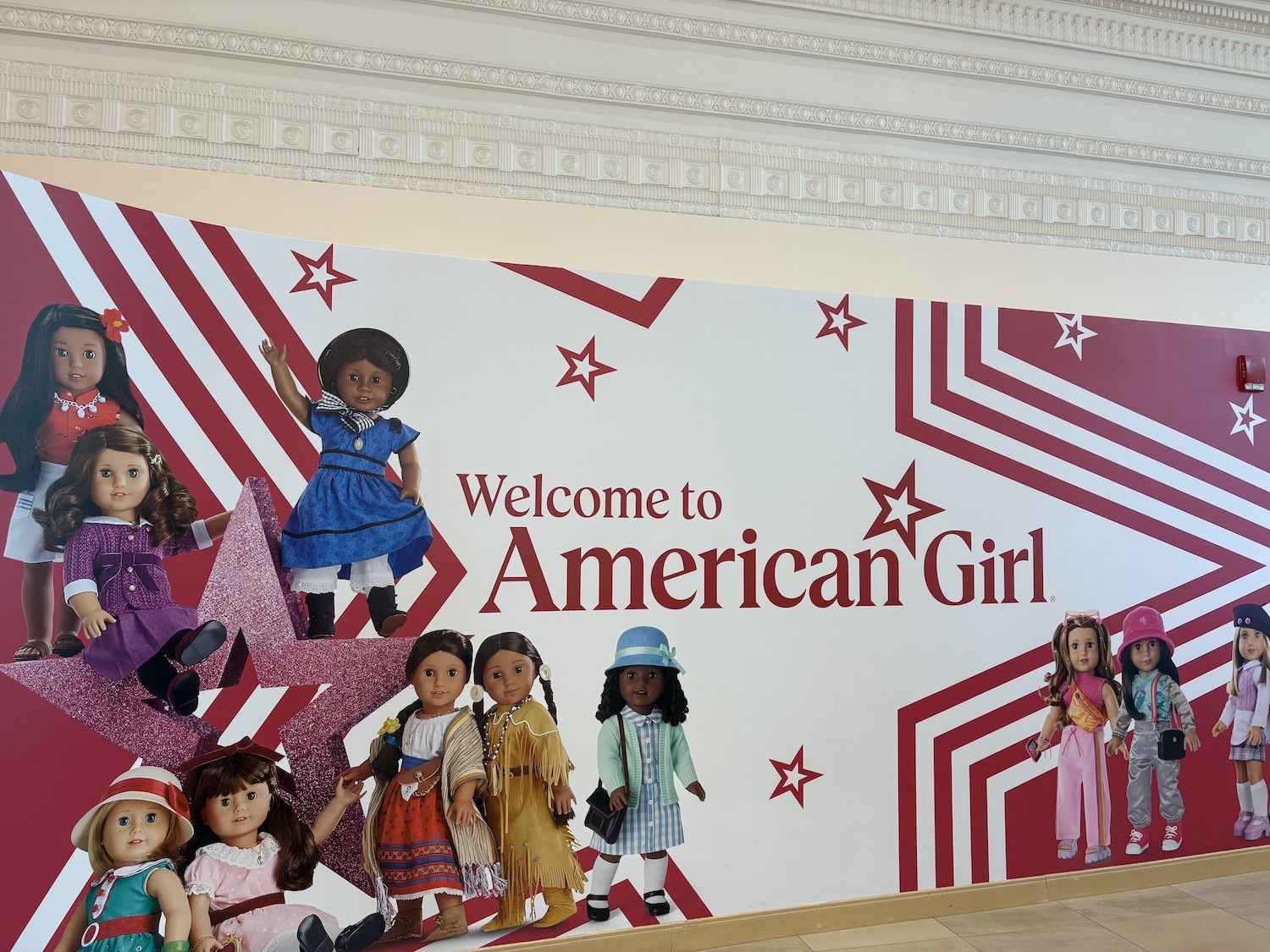
At its height, American Girl had permanent store locations across the U.S., Mexico, Canada, United Arab Emirates and Bahrain. It also had numerous outlet stores, pop-up shops and temporary boutiques. The stores offer doll hospital services, a salon and ear piercing for girls and dolls, special events and cafe dining experiences. The flagship stores held theater productions as well, but they stopped performances in 2008. Today, American Girl has just seven permanent stores, all located in the U.S., including its flagship stores in Chicago, New York and Los Angeles. The existing stores maintain partnerships with neighboring hotels, providing doll beds and other fun extras for those traveling for the American Girl store experience.
The American Girl Cafe is more than just a fun destination for family vacations and kids’ birthday parties – many adults like it too. On a typical day at the American Girl store, you’re bound to see a couple of tables of adults dining without a child. For grown-ups whose AG collecting days are behind them, dolls are available to borrow. Many older fans do opt to bring their own dolls, though. Some of the most dedicated collectors even have their bachelorette parties and celebrate big birthdays at the cafe. (Yes, American Girl Place does serve alcoholic beverages.)
Miranda Jean Halpin-Schreiber, 27, chose to have her bachelorette party and bridal shower at the American Girl Store Cafe in Orlando. Schreiber said she “always wanted” to celebrate this major milestone at American Girl. As someone with food allergies, Schrieber feels safe dining at AG Cafes, so she thought it only made sense for her celebration to be there. Her guests included her mother, grandmother, her best friend and her mother, another close friend, her niece and cousin. Almost everyone in attendance dined with a doll of their own or one they borrowed from Schreiber – her niece even bought a new doll at the store.
Schreiber has seen a significant uptick in the number of young women dining at American Girl Cafes without children. Olivia Rodrigo (who portrayed 2015 Girl of the Year character Grace in the film adaptation of her story) was spotted visiting the New York American Girl store in 2022, which Schreiber guesses is one reason for the surge in popularity among this demographic.
Competition
In 2004, Mattel officially dropped the “Pleasant Company” name and opted for the short and sweet “American Girl.” The characters’ stories delivered a message about the importance of compassion and bravery in the face of challenges. But what does being an American Girl mean in 2025 – a year where girls and women in the U.S. have fewer rights over their own bodies than 1974 historical character Julie Albright? World traveling Girl of the Year dolls with expensive hobbies (Lila, Girl of the Year 2024, takes up gymnastics and horseback riding, and American Girl released multiple playsets for both sports) come across as a little tone-deaf to some collectors with so many Americans struggling financially. Now tariffs are making the already high AG prices skyrocket higher than ever – to as much as $310 for the Wednesday Addams collector edition doll. Some longtime fans of AG are questioning their support of the brand and even seeking an alternative.
Meet Alexi, Brianne, Charlsea, Jenna, Léonie, Saila and Taryn – the Maplelea “Canadian Girl” dolls. Each doll represents a different part of modern-day Canada. The 18-inch Maplelea dolls’ clothing and accessories are interchangeable with American Girl. They’re not a copy-cat or a cheap knockoff of the American Girl, although they are less expensive than American Girls. With their cherubic faces and cheery smiles, they look different from American Girl dolls too. Some doll fans on social media say the Mapleleas trigger “uncanny valley,” the unsettling feeling that comes from human-like nonhuman things.
But many collectors are charmed by the dolls and their Canadian stories. According to some collectors, when it comes to quality, Maplelea finishes ahead of AG. Like American Girl though, the dolls are not manufactured in their namesake country, but instead in China. The dolls are about $99, a significant difference from AG dolls, which range in price from $135 to $310.
American Girl has always gotten away with selling their items at a high price point. Even under Mattel, grandmothers and other gift-givers viewed the dolls as heirloom quality – the type of toy a young woman could pack away and save for her own child someday. Many AG fans have done just that. But now, Mattel has in many ways turned the dolls into 18” Barbies, the antithesis of Rowland’s original goal.
Rowland started the Pleasant Company American Girls Collection to represent girlhood. They were not baby dolls like most popular dolls at the time or adults like Barbie. Yet – in addition to an ever-growing collection of Disney princess American Girl dolls – American Girl has released multiple Barbie collaboration dolls and outfits. Dolls like Peaches ‘n Cream Barbie are targeted at adult collectors and seem like just another way for the company to cash in on 1980s nostalgia.
Other American Girl dolls have taken on the look of a typical fad fashion doll too. The “Long Hair Looks” dolls were a small win for those seeking more diversity in their doll collection, with one of the dolls having painted on laid edges (a style associated with Black culture, inspired by the styles of the 1920s and popularized in the 1990s) and other haircare supplies often used by Black girls and women. However, the focus of the dolls is still on their hair in a way that feels like a gimmick. They are not marketed as dolls meant to look like their owner like the Truly Me dolls, and they don’t have accompanying stories like the historical dolls or Girl of the Year/World By Us and other contemporary character dolls.
With more emphasis on haircare or hairstyling as a profession, the dolls could be considered educational, but they don’t go that deep into either. And it isn’t just the appearance of the dolls and their items – the quality is on par with these cheaper dolls too. In recent years, customers have reported issues with the quality of the dolls’ wigs. The dolls have always been more poseable than competing 18” dolls, like the Our Generation line sold exclusively at Target. Yet customers have complained about their new AG dolls coming with loose limbs (a problem that is frequently seen in older dolls and can be “treated” for $45 [limb tightening] to $88 [new limbs] at American Girl’s Doll Hospital). With tariffs in effect, the prices are consistently rising, and some collectors just aren’t sure it’s worth it anymore.
Historical character fans had an exciting new release recently: a line of plush historical character dolls called “My First American Girl.” While the price is still steep at $65 each and the collection excludes some of the company’s most beloved characters like Kaya and Kit, the smiley plush dolls and their “Hello [character name]” board books have gotten the attention of fans looking to grow their own collections or introduce a young child to the magic of American Girl.
The future of American Girl is uncertain. With the brand’s 40th anniversary, the nation’s 250th birthday and Girl of the Year doll Raquel, who is related to original historical character Samantha, there are bound to be lots of surprises in store for next year. Historical characters might make a triumphant return to the forefront. Or they might continue to be overshadowed by big collaborations. Girlhood is changing and maybe 1986 American Girl couldn’t stand the test of time, but it certainly lives on in the hearts of the women who love the company.
Alivia Giles is a recent graduate of the Medill School of Journalism. Keep scrolling to continue reading additional reporting and writing by Alivia on American Girl dolls.
HISTORY & MATTEL
In 1986, Wisconsin teacher Pleasant Rowland released the first three American Girl dolls: Samantha (a 1904 orphan raised by her wealthy grandmother), Kirsten (an 1854 Swedish immigrant) and Molly (the daughter of a doctor serving in World War II). Twelve years later, Rowland sold the company for $700 million to Mattel, the toy giant behind Barbie, Hot Wheels and Fisher-Price.
American Girl has seen highs and – especially in recent years – lows. Longtime collectors say they worry the company, built on Rowland’s idea of teaching children about history through wholesome dolls and educational books, is changing – and not for the better.
Mattel introduced “best friend” dolls (Nellie, Emily, Ivy, Ruthie and Elizabeth) and discontinued them in 2014, reportedly to “refocus” and simplify the historical line. This proved to be a pivotal move for the direction American Girl was taking the historical character collection. Mattel eliminated Marie-Grace and Cécile due to low sales as well as their desire to simplify the historical collection with just one character per era. They retired Caroline as well. Unlike many characters, these dolls have yet to be brought back by Mattel even for limited runs, with no clear reason why.
In 2014, Mattel rebranded the historical character line as “BeForever” and re-released the customer favorites with different clothing, accessories and other items. Julie, the 1970s era character, was given tie-dye, peace sign prints and a headband across her forehead. Some adult collectors think the outfit looks more like a groovy Halloween costume in modern day America than a historically accurate look a 12-year-old would have worn. Despite negative feedback, the company has not switched the ensemble out with the original peplum top/bell bottom look Julie wore originally. Julie’s clothing pieces have risen in popularity among Truly Me American Girl collectors, so it is possible this is why Mattel has chosen to keep the updated looks around. Mattel dropped the BeForever title in 2019 and reverted to the “historical character” name, but many of the changes implemented in the rebrand remain.
The “semi-retirement” of dolls has been a touchy subject for many collectors too. While Disney dolls, the Barbie and Wednesday Netflix show collaborations and the 1999 twins Nicki and Isabel have been promoted heavily, dolls like Native American Kaya, escaped slave Addy and Mexican Josefina have been pushed aside. Kaya remains the only Indigenous doll – historical or modern – the company has released. Addy’s intense tale of escaping to freedom taught many young girls about the reality and horrors of slavery in a way elementary and middle school education couldn’t. Josefina, a Mexican character beloved by millennial collectors, has received the same treatment.
Two of the original three characters, Samantha and Kirsten, have been made available exclusively in special edition collections – at higher price points ($175 for the doll, her accessory set and “Meet” book). Kit, who once upon a time saw high sales and even a starstudded film adaptation, was brought back with her dog and limited clothing and accessories. Now only the doll in her original outfit is available for purchase – and she is $40 more than the “regular” historical dolls.
When American Girl released Melody, whose story takes place in 1964 Detroit, the non-flagship American Girl stores removed Addy from the main displays, moving her to a less prominent place in the store. With the introduction of a new Black character, American Girl pushed Addy to the background. While both girls’ stories are important and each character experiences trauma, it is clear American Girl has crafted a more “fun” Black character to focus on. Mattel can set aside the uncomfortable topic of slavery and release floral print dresses and a Motown recording studio for Melody.
Including the short lived “best friend” dolls, American Girl has released 25 historical dolls. Just four of these dolls (Addy, Cécile, Melody and Claudie) are Black. Kaya is Indigenous, Nanea is Native Hawaiian, Ivy (Julie’s retired companion doll) is Chinese-American and Josefina is Mexican. The rest of the dolls are white. If multiple white dolls’ stories can be promoted equally, it seems that there would be enough room for every girl of color to have a place in the world of American Girl.
A lot of AG fans have been left wondering if Revolutionary era doll Felicity Merriman will ever see a revival. With every other “retired” doll returning at some point in some way, it seems like Felicity would be past due for her moment. But it’s complicated. Although the books and film adaptation (which starred a young Shailene Woodley before her somewhat controversial role as Amy in the Freeform [formerly ABC Family] series “The Secret Life of the American Teenager”) never explicitly state it, multiple minor characters are enslaved people “owned” by the Merriman family. While Mattel could bring back the beloved character without the books or release edited versions of the books, they may run the risk of upsetting fans who grew up with the character’s stories and don’t want to see them abandoned or changed. Creating a story in which Felicity defies her family’s beliefs and opposes slavery would involve a lot of time and effort, all for a character that wouldn’t be as profitable as a modern character or a big collaboration.
The company’s contemporary dolls have seen their own controversies and criticisms. In 2009, American Girl introduced Chrissa Maxwell as a part of the Girl of the Year (referred to by fans as GOTY) collection. Ten-year-old Chrissa moves to Minnesota, where she attends a new school and is bullied by a group of three girls who call themselves the “Queen Bees.” American Girl created two companion dolls for Chrissa: Sonali, a former member of the Queen Bees who sees the error of her ways, and Gwen, another victim of the Queen Bees’ bullying. Some parents online criticized and deemed “inappropriate” Gwen’s story of living in a car with her mother before moving into a shelter. With the release of the movie “Chrissa Stands Strong,” the character’s story was a hot topic. The dolls and their collection were only available for a year, though, and by 2010, American Girl had swiftly buried the issue and introduced a new, noncontroversial character named Lanie.
American Girl saw outrage from some of its most dedicated fans when it released contemporary character Logan Everett, the first 18” boy doll character. What struck American Girl collectors as unusual – and problematic – was that the brand turned to the face mold exclusively used for the Kaya doll, the only Indigenous character to date. Kaya’s unique face mold is intentional. To the Nez Perce tribe, bared teeth would have been viewed as a sign of aggression. So, Kaya became the first American Girl doll to display a closed mouth smile. Fans felt that the use of the same face structure on Logan, a white contemporary boy doll, implied that Kaya had a more “masculine” appearance than the other dolls. In July 2018, American Girl announced the Tenney and Logan characters’ retirement and by December, “archived” the entire collection.
A few years later, some conservative parent groups were angry about the introduction of GOTY 2021 Kira Bailey’s two great-aunts, Mamie and Lynette. The inclusion of the lesbian characters marked the first instance of LGBTQ+ community representation in the American Girl “universe.” While the subtle diversity appeared to be a step in a positive direction for American Girl, the brand has yet to introduce any other queer characters. A year later, American Girl released a book called “Body Image: How to Love Yourself, Live Life to the Fullest, and Celebrate All Kinds of Bodies” as part of their Smart Girl’s Guide series. The book included information about nonbinary pronouns and gender-affirming care. Conservative groups again became angry with the company for its LGBTQ+ inclusive content. The book did not of course come with the introduction of a transgender or queer identifying American Girl doll.
BOOKS
When former elementary educator Pleasant Rowland started American Girl, she wanted to sell dolls – and teach children about girlhood and history through reading. Her dedication to publishing historically accurate and engaging books indicated that to Rowland, the stories behind the characters were as important as the dolls.
Today, Sarah Masters Buckey and Denise Lewis Patrick are two of the writers responsible for bringing some of American Girl’s beloved historical characters to life on the page. Buckey, who penned several mysteries and short stories for American Girl, wrote Marie-Grace’s six book series too. Patrick wrote the stories of Cécile (released alongside Marie-Grace in 2011), Melody (whose story takes place in Detroit in 1964) and McKena (a contemporary character from the 2021 World By Us collection).
American Girl contacted Patrick to write the Cécile books after an employee read one of her previous works of historical fiction. Like Cécile, she grew up in New Orleans. To shape the new American Girl character, she worked diligently with the company’s team of historians to ensure she was getting every detail historically accurate, and with Buckey, who was simultaneously writing the Marie-Grace companion series, to make sure the two stories fit together.
American Girl again looked to Patrick when they needed an author to tell the story of 1964 Civil Rights era doll, Melody Ellison. While Melody’s stories took place in Detroit, not New Orleans, Patrick, a Black woman from the same era, felt a similar connection to Melody. Although Patrick’s heart seems to be in historical fiction, she also wrote the story of McKena, a contemporary girl American Girl introduced in 2021 along with two other characters in their World By Us collection who drew attention to social justice issues in modern-day America.
Patrick owns the dolls whose stories she told – and a special piece of furniture from each of their collections. She is especially proud of Cécile’s oak desk, which she remembers researching when she wrote the books. But American Girl gifted her additional items, which she sent to her son’s house for her granddaughters. Her oldest granddaughter, who is 8, is just getting into reading Patrick’s books.
But the girls don’t know much about what she does as an American Girl book author, she says. “It’s not a big deal for them because it’s what I do. I think if there were a new doll, yes, that would be a big deal. It’s just what grandma does. ‘She’s working on another book,’ is what my sons would say.”
COMMUNITY
Nearly 5,000 American Girl collectors, almost all of them adult women, belong to a Facebook group called The Dolly Domain. The woman behind the page is Cindy Toledo. Her daughters began collecting American Girl dolls in the mid-1990s, but when they “grew out of” them, she said, she packed them up in her attic for safe keeping.
“I kind of forgot about them, and then about five years ago when my granddaughter was born, I took them out of the attic. They were in perfect condition,” she said. “All of a sudden, this craziness came over me. I went berserk starting up the collection again. I think we had about 15 dolls five years ago. Now I think we have about 115.”
Three years ago, Toledo started The Dolly Domain for adult American Girl doll collectors to chat with one another. Unlike many popular American Girl social media groups, Toledo prohibits buying, selling or trading on the page. She acknowledges her page differs from a lot of other American Girl collector groups.
“We cover it all. We do the Girls of the Year, we do historical (characters), we do the Wellie Wishers, we do the (Bitty Babies).There’s a lot of groups that will just do the historical (characters), and then they don’t allow any of the other newer dolls on their page. They have a little bit more restrictions. And I run a contest every month. (It’s) basically just a lot of fun. It’s the first thing (group members) do when they wake up in the morning – they get a cup of coffee and they log onto Dolly Domain, you know, they have a couple minutes of enjoyment.”
Since starting her Facebook doll community, Toledo has also enjoyed organizing meet-ups at American Girl stores, which has allowed internet friends to “officially” meet, form connections and make fun memories.
TRAVELING DOLLS
Toledo also organizes a travel program for dolls like Saige, a 10-year-old who spent the summer traveling around the U.S. She stays for a little over a week at a kind stranger’s home before they mail her to her next temporary waystation to make new memories.
Toledo does not take the process of choosing doll hosts lightly. Anyone who wants to welcome one of her dolls into their home is carefully vetted.
“I usually pick about 10 or 12 people to host. Typically, the rule is you have to be a top-contributor on the page,” Toledo said. “I’m not going to send my doll to anyone who is not on the page or not participating. We had to skip over (a) person because I just felt like, ‘OK, you’re missing in action right now. I don’t know if I can still trust you.’ … I have to make sure that my doll is going to someone that’s going to respect her and then return her.”
Hosts are expected to post pictures of their visitor exploring and having fun on vacation. When her stay is over, they must send her to her next destination at their own expense. This can get pricey if the doll has accumulated gifts – clothing and other tiny souvenirs – from previous hosts. Toledo sends her traveling dolls out with extra clothing, pajamas, a book about them and a journal for the host to write about their adventures with the doll. Many of the hosts spoil their doll visitor, buying her clothing and accessories during her stay. On a recent trip, the 18-inch doll visited the Indiana State Fair.
With Saige’s trip wrapping up, Toledo is organizing her next traveling doll project. The Dolly Domain Facebook group members voted, and for the first time, Toledo will be sending out a boy doll.
DOLL CUSTOMIZATION
“Who’s your favorite Disney princess?” Jen Gray asks over a Zoom call. I think for a moment before responding: “Belle.” Gray smiles and reaches behind her, pulling out a Belle doll, explaining she crafted her from a second-hand American Girl doll. Gray explains she has created most of the Disney princesses in doll form. She made 1990s manga character Sailor Moon – and is working to complete all of her guardian friends. Gray isn’t sure of the exact number but says she has more than 100 dolls currently – and she truly has a little bit of everything.
While American Girl has a customization option on its website, this is an expensive route to take – plus many doll crafters can do more than the site offers. Customizers frequently swap out eyes and re-wig dolls (sometimes taking a wig off of another doll, sometimes ordering one off of a crafters site like Etsy and sometimes even making the wig themself). Gray has even set her sights on dyeing a doll blue for an upcoming project.
DOLL IDENTIFICATION
To a non-super fan, a Kirsten is a Kirsten, an Addy is an Addy, a Samantha is a Samantha. But how do you differentiate between a 1989 “Sam” or a 1994 “Sam”? Can you identify a Just Like You (JLY) 4? If you’re looking to get into the American Girl doll buying and selling game, this is crucial.
Some of the most sought-after dolls are the “white-body” original three dolls. Rather than the tan or brown flesh color of most American Girl doll torsos, the earliest Samantha, Molly and Kirsten dolls have white torsos. This was changed when Pleasant Company introduced Felicity in 1991. Because of her clothing’s lower necklines, part of the doll’s body was exposed. From then on, all of the dolls were manufactured with flesh-colored torsos that matched their vinyl limbs.
Depending on the condition of the white-body doll, they have been known to sell for anywhere from $200 to $1,000. White-body dolls signed by Pleasant Rowland herself can go for a few thousand dollars – and they’re very rare. According to American Girl News, Rowland signed the first 5,000 Samantha, Kirsten and Molly dolls along with the first 1,000 Felicitys and the first 500 Addys.
The “best friend” dolls are a rare find too. While it isn’t a challenge to find Samantha, her friend Nellie (with or without the defect that turns her skin orange over time) is harder to come by. Julie’s friend Ivy is a tough doll to track down too. Only available for about three years, Caroline, Marie-Grace and Cécile are uncommon as well. How much you can actually get for one of these dolls depends on its condition; played with dolls sell for about $200 and new-in-box dolls sell for as much as $500.
DISABILITY & ILLNESS
Bri E. is a 29-year-old doll collector. Blind since birth, Bri gets very little out of visiting museums because most items are roped off or displayed behind glass. Instead, Bri learns about history through her love of American Girl. In addition to collecting dolls and other pieces from the brand’s historical character line, Bri made multiple trips to her local American Girl store (before its recent closure), where staff worked hard to make her experience fun and informative.
“The staff were always so nice and helpful. One member in particular went above and beyond to explain things so I – as a blind customer – could better understand them,” she said. “They would always open cases for me to feel the dolls, allowed me to open boxes and even let me sit Kaya on a horse to see how she’d ride in her dress.”
Her favorite doll is Kaya, who represents the Nez Perce tribe of Native America in 1764 and who takes care of her adopted sister, Speaking Rain, who is described in the stories as strong, determined, trustworthy and blind.
Dolls have proven to have therapeutic benefits. Dementia and Alzheimer’s patients are often given dolls. The task of “caring for” the doll can help people manage their emotions and feel calmer. Regardless of the specifics of their illness or disability, some patients may benefit from simply holding a doll when they feel anxious or upset. For many collectors living with chronic illness, dolls often serve as a source of comfort.
Shannon Kautz, 54, started collecting American Girl dolls eight years ago. American Girl came out when Kautz was 15 and, although she liked them, she felt she was “too old” to begin collecting dolls. So, she bought one for her daughter who, now 20, still collects them. Kautz takes a doll with her for comfort when she goes to get infusions every five months, but she “hides her” out of concern for what others might think. She did recently reveal her hobby to her nurse who comes to her home for treatment.
“I finally told my nurse about my dolls about five months in. I recently reconnected with my best friend (from) high school, but other than that and going to the AG store, I don’t take my dolls out. I did just purchase a special bag so I can feel hopefully less weird about taking a doll out,” she said. “I’m not sure what holds me back because I tell my kids to just be themselves, and I usually try to do the same. I’m not sure why I can’t just embrace taking my dolls with me because they do give me so much comfort.”
Donna Horvath, 53, has been collecting American Girl dolls since her breast cancer diagnosis about a year ago. “I think I was having a bit of an identity crisis,” she said. “I was (reading) a book called ‘Dolls of Our Lives: Why We Can’t Quit American Girl’ (by Allison Horrocks and Mary Mahoney).”
Like Kautz, Horvath felt she was past the doll phase when American Girl started, but she had always dreamed of having one anyway. As an adult, she realized she was able to make that dream happen – and she figured she might as well go all in.
“I started thinking, ‘If I’ve got Samantha, I need (her best friend) Nellie. If I’ve got Samantha and Nellie, I need Molly and if I’ve got Molly I need (her best friend) Emily,’” she said. “And it just spiraled. I think my last count was 62 or 64 (dolls).”
One of Horvath’s favorite dolls is her “mini me,” a doll that resembles herself as a little girl. Dolls have given Horvath a creative outlet, comfort during difficult life changes and a connection to her inner child.