
By Jenna Mayzouni
Medill Reports
Bashar al-Assad’s reign over Syria ended on Dec. 8, when opposition forces took the city of Damascus.
The Assad government committed numerous human rights violations, including the kidnapping, jailing, torture and murder of civilians, according to Amnesty International.
Following the Syrian revolution and civil war, the Syrian Network for Human Rights estimated that 717 Syrian journalists and media personnel were tortured and killed in the conflict since March 2011.
The Assad government’s conduct after the Arab Spring and crackdown on the largely peaceful protestors escalated the tensions in the country to a civil war. The war led to the Syrian refugee crisis, where an estimated 14 million Syrians were forced to flee the country, according to USA for UNHCR.
While the future of Syria under the new government remains unclear, Halla Al Mallah spoke about her journey as a journalist under the Assad government and the challenges Syrian journalists in exile faced. This interview was conducted in June 2025, 6 months after the collapse of the regime.
Editor’s note: This interview was translated from Arabic to English by Jenna Mayzouni.
Jenna Mayzouni: Could you tell me about yourself and your choice to study journalism?
Dr. Halla Al Mallah: My name is Dr. Halla Al Mallah, Ph.D. I am a Syrian citizen originally from Damascus. My family has lived in Damascus for generations and has a long history with the city. None of us had any plans for leaving until the events of the Syrian revolution.
My family has remained in Syria, and I am the only member who has left for abroad. I went to complete a Ph.D. program at Marmara University in Turkey, after completing my master’s at Damascus University.
I grew up in Damascus with my four sisters and parents. My parents were kind. My father was a lawyer, and he was educated and open-minded to the world. He wanted to make sure that all of his daughters received a good education and good opportunities.
When I was applying for college, I was looking for a more nontraditional path away from the more stifling conventions of the society around me. Most girls I knew studied in more traditional fields such as geography, history, medicine, engineering, law, English or Arabic.
But I wanted to try something that was not traditionally geared towards women, and so I went to see and learn more about the communications department.
When I first mentioned I was interested, many people in my community tried to dissuade me from applying to the department. The communications department and journalism in Syria had a reputation for being westernized and risqué since it was a predominantly male field. As a woman who wore the hijab and came from a more religious family, many tried to dissuade me and said that my hijab might take away from my opportunities.
But my father was extremely supportive and encouraged me to pursue the field. He told people that I was going to be like Khadija Benganna, a famous Algerian journalist and one of the founders of Al Jazeera who wore the hijab.
Since I had high marks, I was able to get into the communications department and really excelled in the field. I graduated as one of the top students in my class. I decided to pursue my master’s and found work as a teacher’s assistant in the department shortly before the Syrian revolution began.
Mayzouni: What happened after the Arab Spring and Syrian Revolution in 2011?
Al Mallah: There was a lot of scrutiny and pressure on the communications department, especially for journalists who were in the field.
I was not working in the field and focused on academics and research, but there was always the looming pressure and fear of retaliation from the student union [National Union of Syrian Students].
The student union was supposed to function as a governing body to aid and support the students with their problems. However, after the revolution our student union functioned similarly to the “mukhabarat” or an intelligence office for the government.
The student union started spying on and harassing students. They started following students’every move and eventually started harassing the teacher’s assistants and professors as well. It became clear that they were targeting and following anyone who expressed any dissident views on the Assad government or participated in the initial peaceful demonstrations of the revolution.
The environment of the university became suffocating, and as backlash increased towards universities, I felt like I needed to leave. There was an extreme level of scrutiny and surveillance that became unbearable at some points. Turkey at the time had offered scholarships to Syrian students, so I applied and got accepted, on the condition that I finish my masters in Syria first.
I did my master’s thesis on the Crimean War between Russia and Ukraine in 2015. My research was on how Middle Eastern and North African Arabic news networks were covering the war. And after receiving my masters in June 2016, I left for Turkey in December of that year.
Mayzouni: How did you start as a journalist?
Al Mallah: When I first started working in journalism in Syria, I worked as a business reporter. It was generally understood that you weren’t allowed to discuss the government or participate in any form of political reporting.
And if you still chose to, you ran the risk of putting not only yourself but your family in danger as well. It became increasingly more dangerous to express any form or dissent or critique after the Syrian revolution. As the conflict escalated, the government crackdown became more intense on the initial peaceful demonstrations and anyone who expressed dissenting political viewpoints.
I tried to avoid that work in Syria to not create any danger or problems for my family. I tended to just stay in the academic sphere.
But when I arrived in Turkey, I started working more as a political journalist. I started writing and working with news outlets that were pro-revolution and opposed to the Assad regime.
It was the first time I was able to voice my support for the peaceful uprising and revolution and my opposition to the massacres and human rights violations that the Assad regime was involved in.
Mayzouni: You have a Ph.D. in media and communications from Marmara University in Turkey. Why did you decide to pursue this degree? And why was it so important for you to get it?
Al Mallah: I had initially wanted to work as an academic in communications rather than a journalist. But when I arrived in Turkey, I saw the opportunity and wanted to balance both academics and reporting.
It was really challenging for me, as part of the requirement of the degree was that I learn Turkish for that first year. So, I was learning a new language and pursuing a Ph.D. in an English program at Marmara University.
Mayzouni: A Committee to Protect Journalists (CPJ) article “Forced to flee: A timeline of journalists’ flight into exile” said dozens of journalists across the world are forced to flee their home countries because of their work in journalism. In your opinion, what were some of the main reasons that drove Syrian journalists to flee and seek asylum?
Al Mallah: There were a lot of journalists who were heroes who were not afraid to tell the truth. And while they were fearless, the backlash and scrutiny of their work from the government was immense.
The Assad regime was particularly harsh towards journalists. Many were imprisoned, interrogated and tortured, especially if they tried to expose facts that contradicted the government’s narrative.
For example, the Assad regime used to bomb a city or a town and claim in the government news outlets that they had bombed a militia site. They would also commit other human rights violations against civilians and claim that the targets were militias or rebel groups.
Even if they made a mistake or were in the wrong, the government and its news outlets would always claim that they were fighting the “terrorist” or the “evil militias”. There was only one voice allowed in the country, the voice of the government, and no one was allowed to question it.
But many of these claims were false. So many journalists in Syria would try to report and publish the truth in media publications abroad.
A lot of the journalists who reported these false claims, including four of my friends, were all arrested, imprisoned and tortured. Three of my friends were kidnapped on campus in broad daylight.
Some of them were able to get out, but only after their families paid millions of Syrian dollars for their release. Some of them were taken and to this day no one has heard from them since.
When the prisoners were freed from the Assad jails in 2024, it was found out that many of the journalists who we had not heard from were tortured or killed in the Assad jails. Some of the paperwork and documents found that some of those journalists died under torture as early as a year or two after their arrests. That included three of my friends.
So people fled Syria because they were afraid. They were afraid for their lives and their families’ lives. Some left because they were in conflict zones or their houses were destroyed.
Some journalists left because there was no freedom of speech. There wasn’t even freedom to have a different opinion. Anyone who wanted to express themselves, whether it was through actual publication or a social media post, was not allowed. At the time, it was only the government that was allowed to have an opinion and every opinion they had was correct. So many couldn’t stand it and had to leave.
Mayzouni: What are the conditions for Syrian journalists who have fled the country but are still in pursuit of covering Syrian news? Is there support and do they have the opportunities to continue working in journalism?
Al Mallah: For me personally, because of my Ph.D. I have worked with people who were upset or intimidated because I had the highest degree in the room. So, some have been wary of me or do not want to listen when I give them advice. But for the most part, I have generally had a good experience.
But for Syrian journalists overall, I would say one of the things that shocked me were the news outlets in other countries.
There were a lot of Arabic or Turkish news outlets that were in opposition to the Assad regime, so you would feel safe to express your opinion and opposition on any topic.
But then you find out that a lot of these outlets still had an agenda. For example, if your news outlets were receiving funds from another country, you were told by your outlet to avoid or discouraged from covering news about that country.
And these types of moments can really get you down, because they make you sad. In university, we were taught about the importance of free press and a diversity of opinions, but then it becomes clear that that falls away against the backdrop of politics.
And as someone who tried to stay true to the truth, there have been job opportunities that I have lost where the reasons for termination were not disclosed or made clear, but I could guess.
Another thing is that when you work for these types of outlets that were opposed to the Assad regime or backed by different governments, you had the potential to have your organization lose funding and close at any time, so it was not a stable career you could rely on.
There was an additional problem where people did not feel obligated to sign contracts, and so you relied on an oral contract and for people to keep their word. But many journalists are now smarter at forcing an actual written contract to be made.
Mayzouni: What do you hope for the future of Syrian journalists and Syrian news?
Al Mallah: Now that Syria is free, we are waiting to see what happens. But I have heard from many of my colleagues that there are potentially some big media projects happening within the country that are being sponsored by international news outlets. A lot of Syrian journalists who were working abroad are also excited and working with different media outlets to bring news to Syria. They plan to use the skill set they learned abroad within the country.
After Assad’s fall, Syrian journalists have been given more freedom to speak and express their opinions. Many outlets have started new practices and new approaches to engage with audiences and media inside Syria. It’s already gaining momentum, but we still need more support and more help to aid media initiatives in a bigger fashion.
There is also a need to support many media personalities and citizen journalists who have been covering the news for the last few years. Many of them have no official training and were working as citizen journalists. So, to not lose those people and have their efforts and work continue to be recognized, we need to give them more opportunities to train, learn and grow their skillset.
I’m also hoping for a future of journalism in Syria that allows for differences in opinions and lively civic engagement and debate. We have already seen it after we were freed that there was a freedom of expression that was not allowed under President Assad. This is good; we are so hopeful and excited for not only journalism but for so many other industries in Syria to flourish.
We are also hopeful that this is an actual democratic government that allows for freedom of speech and freedom of expression. I’m hopeful that the media will focus on issues that affect and concern the citizen of Syria, with full transparency and honesty.
There is a lot of excitement and a lot of change happening, and I hope- no I believe that this will bring about an amazing future for journalism in Syria.
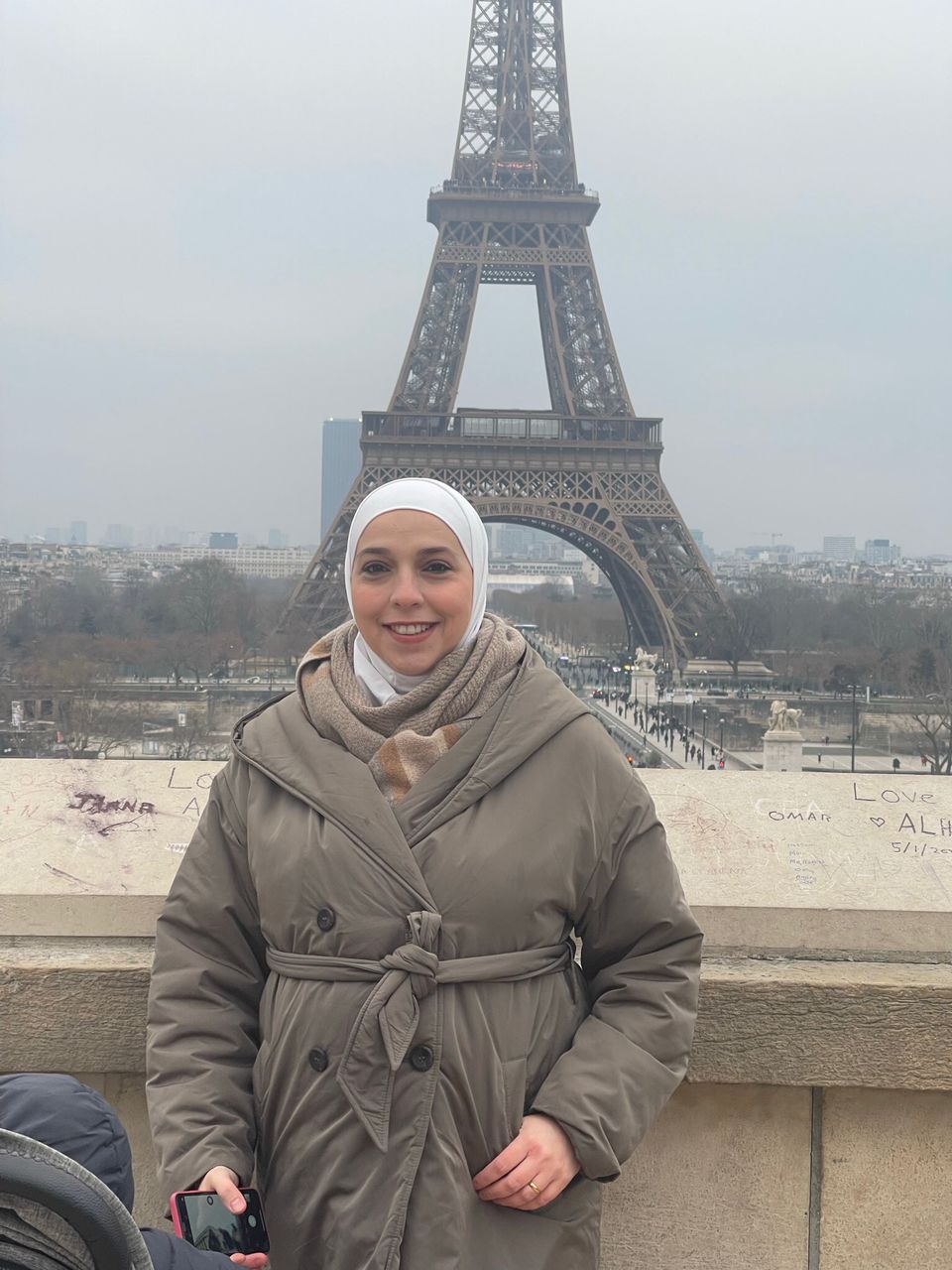
Halla Al Mallah, Ph.D. is currently teaching at a university in France. For more information on Al Mallah you can follow her on Facebook or reach out to Hallamallah4@gmail.com.
Jenna Mayzouni is a graduate student at Medill in the social justice and solutions specialization. Find her on X @jmayzouni23.