
By Will McLernon
Medill Reports
On Saturdays last fall, former Houston Christian University offensive tackle Rodney Leaks would often sit in a Las Vegas sportsbook or at home with his dad watching college football, wishing he was on the field. Instead, he was stuck in the transfer portal.
The 6-foot-5, 310-pound, former three-star high school recruit expected to be picked up by another Division I program when he entered the portal after his freshman year because of a coaching change, but ended up missing a full football season and a year of classes.
“I feel like it was the toughest thing I’ve ever gone through,” Leaks said. “Looking up at the TV, seeing everybody playing college football knowing that they are the same age or we are supposed to be in the same position, (while) I was just sitting at home watching them.”
Leaks’ experience with the transfer portal isn’t uncommon. Out of the thousands of the Division I athletes who entered the portal between August 1, 2023 and July 31, 2024, 31 percent remained active entrants, according to the NCAA’s latest data on transfer trends, which can leave those stuck with unmet dreams, an incomplete education and in some cases, mental health challenges.
Those athletes may still be exploring transfer options, transferred to a non-NCAA school — like Leaks, who signed this month with Trinity Valley Community College in Texas after spending a full year in the portal — or may have left their sport like former Iowa and Washington State punter Max Hoskins.
At both schools, Hoskins said he was told that he wouldn’t become the starter because they had recruited an older former Australian Rules Football player to fill the position.
“That left a huge self-confidence issue in me, I was just having a hard time believing in myself,” Hoskins said. “I was in a pretty bad place (thinking) ‘What am I doing? (Why) do people not want me?’ Is it something with my personality?’ ”
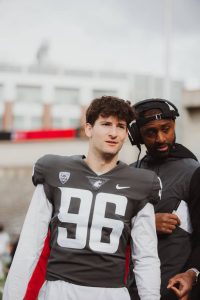
During Hoskins’ second stint in the portal, he decided he would only play for a school that had a good sports business program. So, when the 21-year-old couldn’t find a good fit, he let go of football and enrolled at Arizona State.
Hoskins said there’s not a day that goes by where he doesn’t miss playing football, but he’s the happiest he’s been in college because he doesn’t have to deal with the fear of being replaced on the team or the challenges of finding a new program.
“The portal is stressful and it’s not somewhere you want to be,” Hoskins said. “There’s very much a grass is greener on the other side mentality, but that’s not the case.”
Jamesetta Cleveland, a consultant who founded “Sports Mom University” to help athletes and their families navigate recruiting and the transfer portal, said it’s important for athletes to ask themselves why they are entering the portal other than name, image and likeness (NIL_ opportunities and to have a plan to ensure they don’t get stuck.
That’s because once athletes enter the portal, their spot on the team is often filled, the university no longer has to honor scholarships once the school year ends, and sometimes, credits don’t transfer between schools, Cleveland said.
“I’ve dealt with athletes who cry because it’s like ‘Even if I’m not getting to the league, I was going to be the first college graduate in my family and now I’m not going to be that,” Cleveland said.
Cleveland said the NCAA needs to do a better job on spreading awareness about the range of outcomes that could happen when athletes enter the portal.
“I am definitely pro-freedom of movement and I think it’s a good thing, (but) I believe that the adults in the room have not done their due diligence to see things implemented in a way that’s truly able to protect the well-being of student-athletes,” Cleveland said.
Both Leaks and Hoskins said they expected to receive messages from Division I coaches, but instead had to spend months advocating for themselves by reaching out to football programs.
Tess Kilwein, a former Vanderbilt athletics sports psychologist who now owns a private practice, says the portal can be a positive because some athletes find a program that is better suited for them, but it can lead to negative mental health impacts for players who struggle to find a new home.
“When the offers don’t come or when you know you have a good conversation (and) there’s no follow-up, that can create a lot of anxiety for athletes about ‘Do I even have options next?’” Kilwein said.
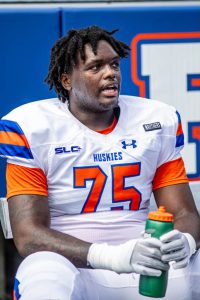
While Leaks was in the portal, he said coaches would point out little flaws in his blocking techniques and fitness.
“It kind of broke me down at first because it made me feel like ‘Dang as good as I thought I was, like as good as I thought as I was doing, I really wasn’t,’” Leaks said.
“There were a lot of nights where I was worried what was going to happen and I was worried I was not a good enough athlete to make it far in life.”
However, those feelings motivated Leaks to take his training to a new level as most days he spends two hours at the gym working on strength at the gym before driving to his former high school’s football field for another two-hour workout focused on improving his footwork.
“I’m going to prove that I’m a good athlete, that I’m a Division I guy,” Leaks said. “And that I will be going to the next level.”
Will McLernon is a graduate student at Northwestern’s Medill School of Journalism specializing in sports media. You can reach him at willmclernon2024@u.northwestern.edu.