
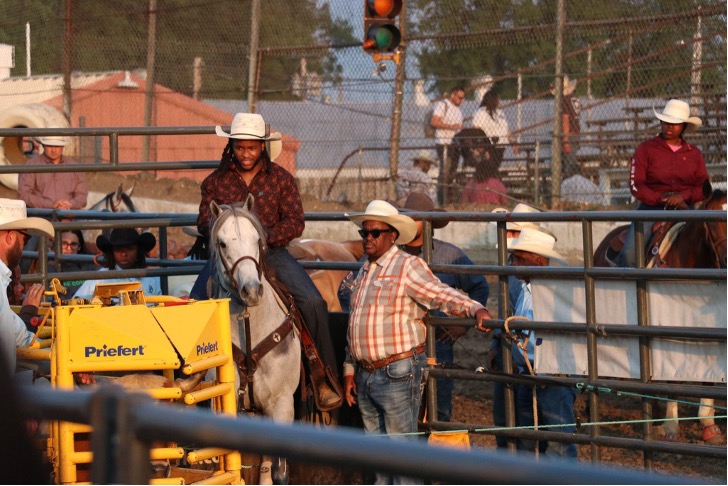
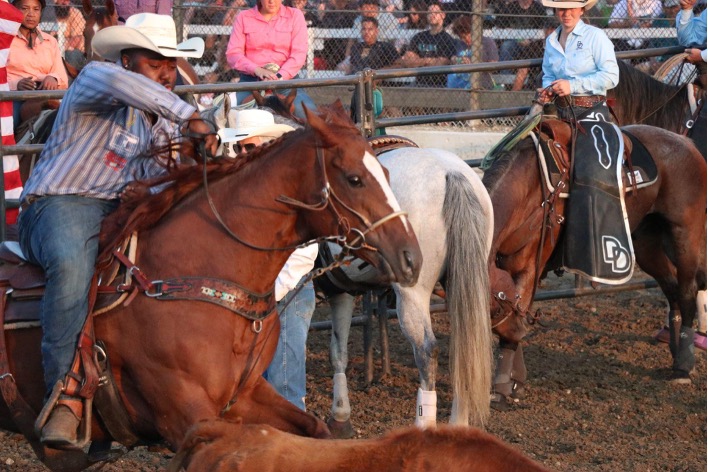
Horse hooves knocked chunks of dirt over the steel bars of the arena. Stallions charged 20 mph after a loose steer. Within seconds, a cowboy slid off his steed, grabbed the loose animal by its horns, flipped it over his shoulder and tackled it to the ground. The crowd clapped and hollered.
On a Saturday evening in August, spectators and competitors paid $10 a ticket to gather at the Kankakee County Fair Rodeo and watch the steer-wrestling performance by 24-year-old Black cowboy Dorian Autman and other competitors. Autman sat on his horse, Blue, preparing to battle his bovine opponent. His father, Jermel Autman, stood next to him in the steel-barred chute that was holding the two animals in position.
“When I’m up there, I try to make it like I’m still at practice,” Dorian Autman said. “Being comfortable and relaxed because anything can happen.”
Like Autman’s fans, pop culture is also embracing the Black cowboy – 365 days a year. From Jordan Peele’s “Nope” to Beyonce’s “Cowboy Carter,” tanned cattlemen are becoming more visible. Despite the public’s newfound obsession, Robbins, Illinois, a historically African American community created during the Great Migration, celebrates its homegrown Black cowboys year after year. Multiple generations of cowboys and cowgirls make an old-fashioned round-up possible – but only the Lattings from Robbins have dedicated almost 60 years to producing Black rodeos in the Midwest.
“This is who I am. This is what we do,” said Mike Latting, a second-generation Black cowboy. “You guys go watch baseball games. I’m going to go ride my horses.”
The Latting Rodeo Production company is the oldest Black rodeo in the North and the team behind Autman’s cattle takedown. In 1967, Thyrl Latting, who became a self-taught cowboy in his youth, decided to bring competitive round-ups to his hometown of Robbins.
“Back in those days, you have to understand that being Black and being a cowboy was unheard of,” said Mike Latting, his only son.
Thyrl was the first cowboy in Robbins, a Chicago suburb of fewer than 5,000 people that sits only 17 miles away from the Loop. As a kid, he became fascinated with taking care of livestock. He passed down his self-taught skills to his children, Mike and Tracy Latting, and anyone else who wanted to join. Thyrl died in 2013, but his son, Mike, runs the rodeo production company that was passed down from his father while Tracy lives in Robbins as the only resident with two mares and a miniature pony on her property.
“I give them an opportunity to touch the horse,” she said of the kids in her neighborhood. “That’s mostly all they want to do because they’ve never had that opportunity before, and they didn’t think it was possible to have that where we are in Robbins.”
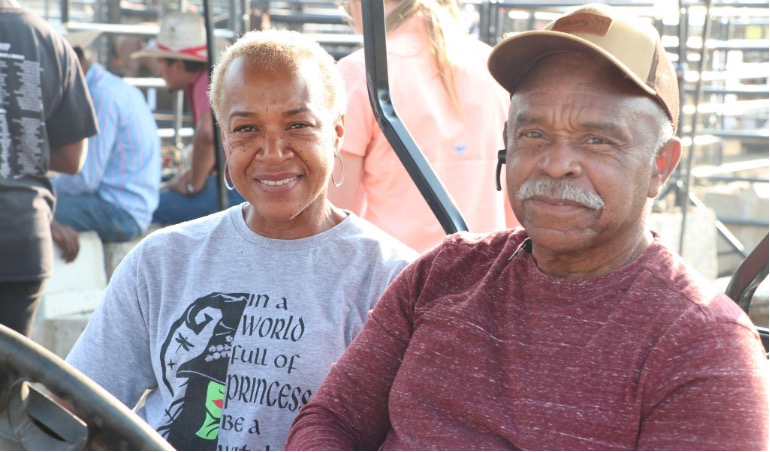
Before retirement, the brother and sister, 73 and 61, respectively, worked as educators. But horses and rodeos have always existed in their lives. Their father became the first Black cowboy in the rural village after buying his first horse, Shorty. Thyrl’s legacy are the Black cattlemen who come to his family’s productions, including the “Robbins Rodeo.”
“Mr. Latting let me use his arena and steers when I was first starting to do this on my own,” Autman said. “He gave me a key so that I could go and practice whenever I wanted to. He gives what he can to anyone who is serious about the work.”
Incorporated in 1917, the village of Robbins is the oldest originally all-Black town in the North. The town’s namesake, Eugene S. Robbins was a real estate developer who sold the previously abandoned land to Black people for $90 a month on a payment plan, according to the Encyclopedia of Chicago. Today, Data USA reports that the village is 85.1% Black, 8.5% Hispanic and 4.3% white. The suburb began as one of the only places where Black families could own land and property in the greater Chicago area. Originally called the “Blue Island Settlement,” the people of Robbins incorporated to establish themselves within the surrounding White community. Once a stop on the Underground Railroad, Black people settled in Robbins after the Great Migration from 1916 to 1970. The promise of economic freedom, self-determination and home ownership drew them in, but they originally lacked amenities like sewage and plumbing.
Tracy Latting built her current house next door to her childhood address. Comparing data from the National Association of Realtors and Data USA, the home ownership rate in the town is 20% higher than the national average for African Americans. The land her property sits on was previously the Robbins Rodeo School, founded by her father. The opportunity of Black ownership in Robbins helped the Lattings contribute to rodeo. Tracy collects rent from tenants in her parents’ former home with no plans to sell anytime soon.
“If I did move, I would probably sell my house and keep my parents’ house,” she said. “It’s smaller so that if I ever wanted to come back, I would have a home to come to.”
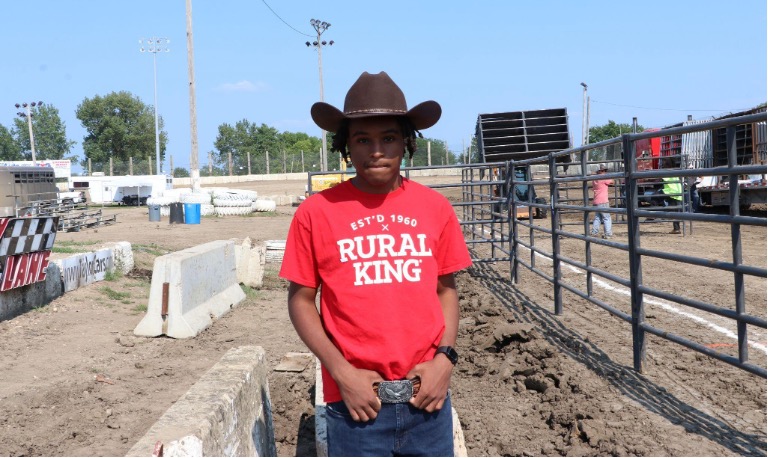
Thyrl Latting’s rodeo company came at a time of economic prosperity in the village characterized by multiple Black-owned businesses. The Lattings’ family business is one of the few still around. Today, Mike Latting employs 10 Black cowboys, who help him build and break down their traveling rodeo. In 2025, they were scheduled to produce 21 rodeos in Illinois, Indiana, Missouri and Michigan between March and November, similar to last year’s lineup.
Da’shawn Campbell, a 16-year-old cowboy, works with Latting’s production team most weekends. While other teenagers spend time at the mall, Campbell tends to animals and assists with Latting’s projects.
“I’ve learned a lot of life skills like patience and consistency doing this,” Campbell said. “I want to do this for the rest of my life.”
For the Lattings, rodeo is a way of life. Mike Latting expects to produce rodeos until his final days, he says.
“I’m having difficulty retiring from rodeo,” he said. “They’ll probably find me behind the wheel of the truck with the air conditioner running and say, ‘Well, guess he died doing what he loved.’”
Until then, he continues to put on rodeos for his community. He also trains the next generation of Latting cowboys through his children and granddaughter – in addition to the youth he trains at his production company.
“This is where I was raised,” he said. “I don’t see any other way. Yeah, it’s important. Why? Because that’s what we do.”
Autumn Coleman is a recent graduate of Northwestern’s Medill School of Journalism.