
By Jenna Mayzouni
Medill Reports
The sound of the Huehuetl drum thuds gently against the ground as Sergio places it down on the cement playground in Harrison Park, in the Pilsen neighborhood of Chicago.
His wife, Ana, places offerings in front of the drums and begins preparing the copal incense for the practice of the day. They are usually the first to arrive.
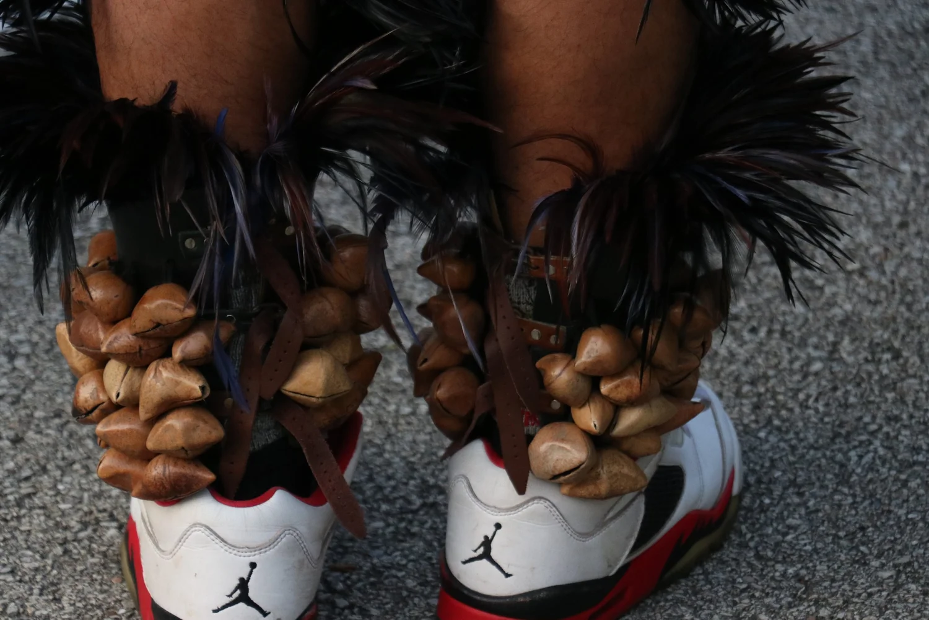
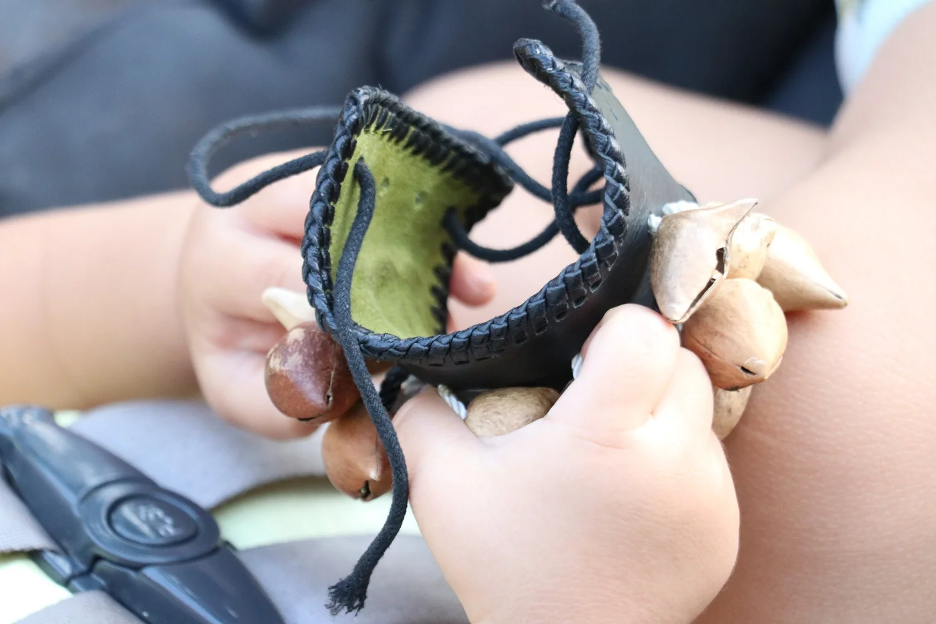
Children run through the park, zooming around the drums. Ana and Sergio sit on the side of the playground and begin to tie their ayoyotes, which are percussion instruments meant for the ankles. Members of the group arrive and greet them and then don their ayoyotes with similar leatherwork to Ana’s and Sergio’s.
That’s because over the years, Ana and Sergio, who asked for their last names not to be included, have made many of the regalia pieces for the members of their Aztec Danza group, Huehuecoyotl.
Aztec Danza is a traditional Indigenous Mexican folklore dance with Aztec and Nahua origins. Dancers perform ritual prayer and connection to their ancestors. Spanish colonization of Mexico suppressed the dance and rituals, but they have been revived by many Indigenous Mexican groups as a way to reclaim cultural identity.
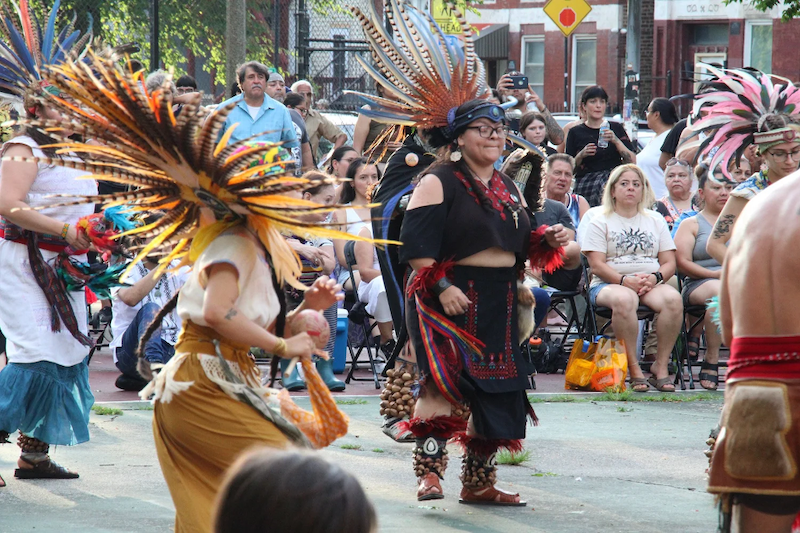
In Chicago, the Pilsen neighborhood is the predominant hub for most Aztec Danza groups in the city, including Huehuecoytl.
Ana and Sergio are leatherwork and regalia crafters. They design and create items to use in ceremonies, including copilis, ayoyotes, wrist braces and other traditional pieces.
Ana credits Sergio with helping her get into the practice.
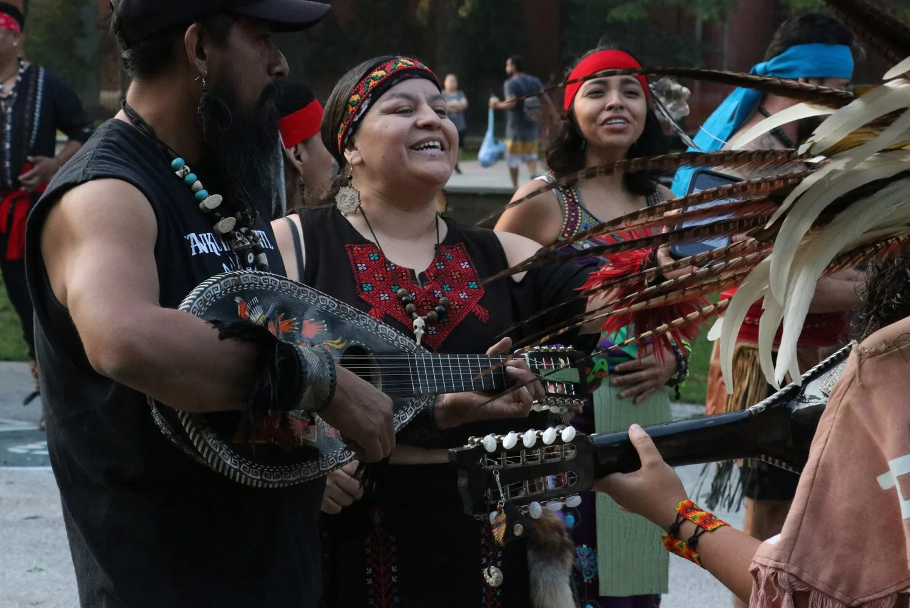
“We started our group, so we needed our own regalia. And we started doing it for ours and for the people that are in our group,” Ana said. “He taught me how to make them. He taught us how to dance, and he taught us how to make leather crafts.”
Ana, Sergio and their group reflect a larger trend of Indigenous communities across the world – and specifically in the Midwest – reclaiming and teaching their cultural identity to the next generations through cultural crafts.
Negwes White, an Ojibwe and Navajo artist, said he believes maintaining cultural crafts and dance is one of the ultimate forms of resistance.
“When they wanted to kill us, they took away our leaders. They took our culture, and culture is art, food and language,” White said. “So you practicing your culture is the resistance. Movement is medicine, me dancing my culture is resistance. I am adding to the fire of resistance in that way. I think it does a lot for me.”
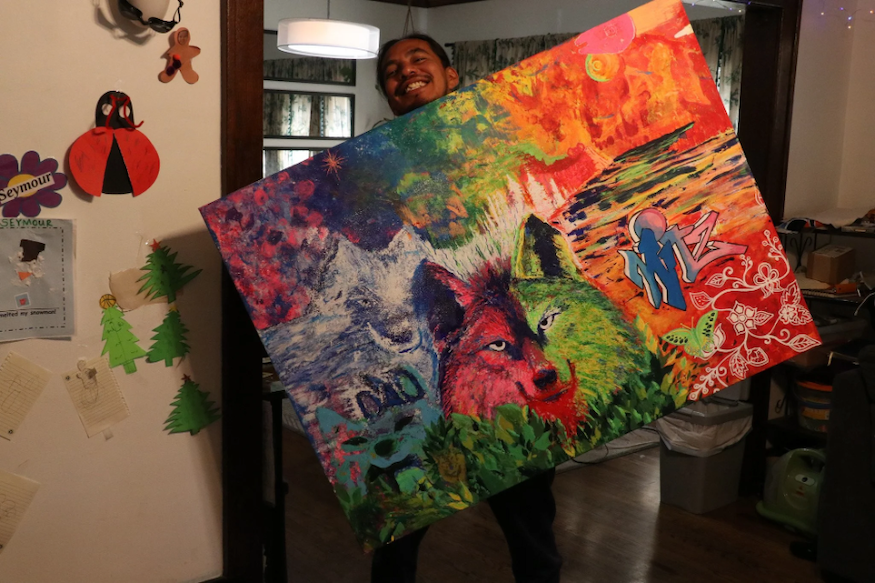
Noelle Garcia, an assistant professor of art at National Louis University, a feminist in residence at Northwestern University and a staff member at the Center for Native Futures, said cultural crafts and art can be one of the strongest symbols of resistance.
“We always think of resistance as something that has to be really confrontational, and sometimes it can be, you know, everyone has a role,” Garcia said. “Some of us make art. And there’s a million prayers and ideas seated inside of it.”
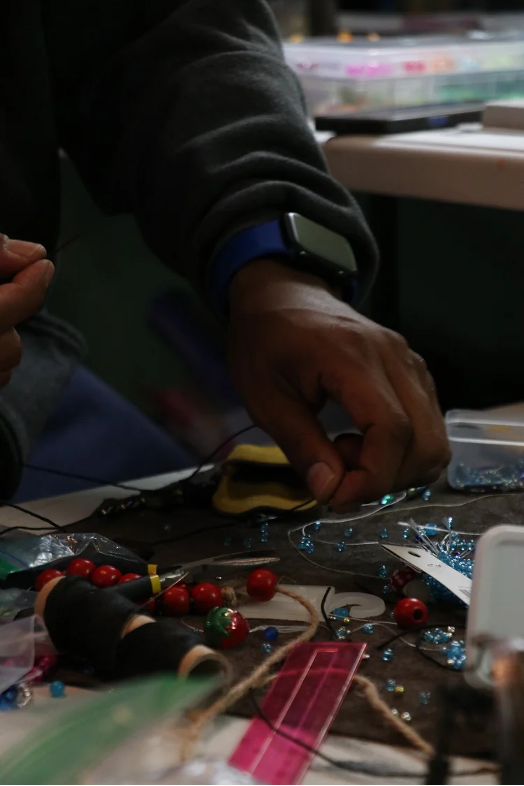
With the rise of social media and the ability to advocate for themselves in front of a large global audience, many Indigenous crafters across the world have been able to revitalize their cultures and crafts.
Western European societies often devalue crafting or cultural arts and artisans as second-class artists or a lower tier of art. But for many Indigenous people around the world, crafting has been a way to reclaim and maintain cultural identity and resist cultural erasure and colonial narratives of who they are.
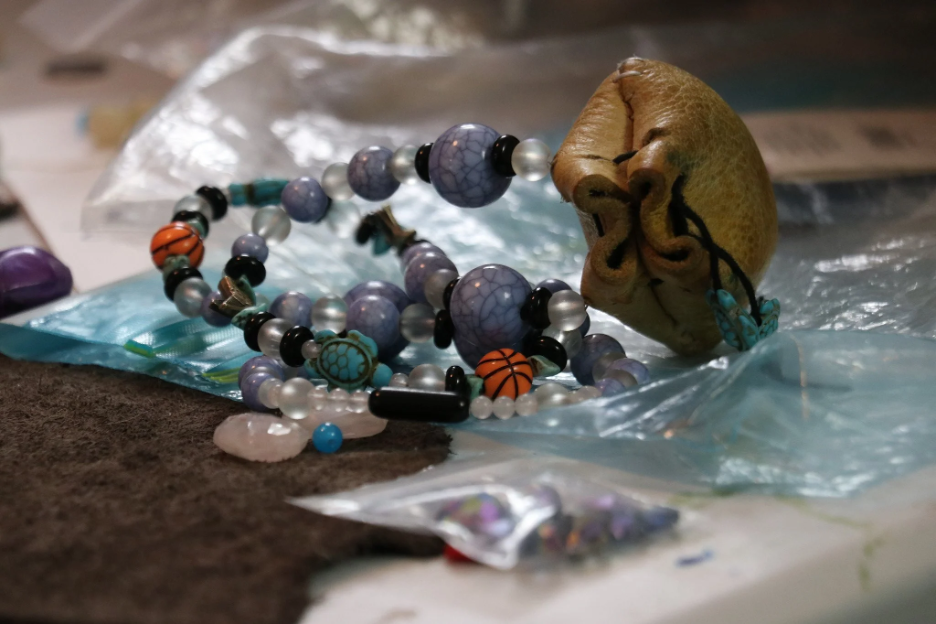
Garcia, herself an artist from the Klamath and Paiute tribes, has focused much of her own art on beadwork and basketweaving. While acquiring her bachelor’s and master’s degrees in fine arts, one of her continuous struggles was the lack of Native American art and crafts in those spaces.
“In art terminology, it’s more of a modern and contemporary artistic medium for America,” Garcia said. “We don’t often treat beadwork as high art or fine art. It’s something that you don’t often get to see within our institutions, even though I’ve just grown up knowing it as an art.”
White had similar experiences with his family members growing up. He said he considers himself to be from a family of artists, but many of his family members were not given the space and respect to create, or their craft was not appreciated.
“My grandmother was straight up everything. The woman was ahead of her time. She was this little Ojibwe woman who didn’t have a high school degree, but she was making sweetgrass baskets,” White said. “She was making sweetgrass turtles and bowls and the most intricate pieces. And to us that was normal, but to the world that was immaculate. We didn’t know she was a master sweetgrass basket maker; we just thought that was just grandma doing her thing.”
Much suffering for Indigenous people in the United States is directly tied to the cultural genocide of Native Americans throughout the last centuries. Policies such as the Indian Removal Act of 1830, the Code of Indian Offenses in 1883 and the forced assimilation through Indian Boarding Schools from 1860 to 1978 all contributed to many Nations and tribes losing access to their historical lands, sacred grounds, ceremonies, traditions and cultural practices.
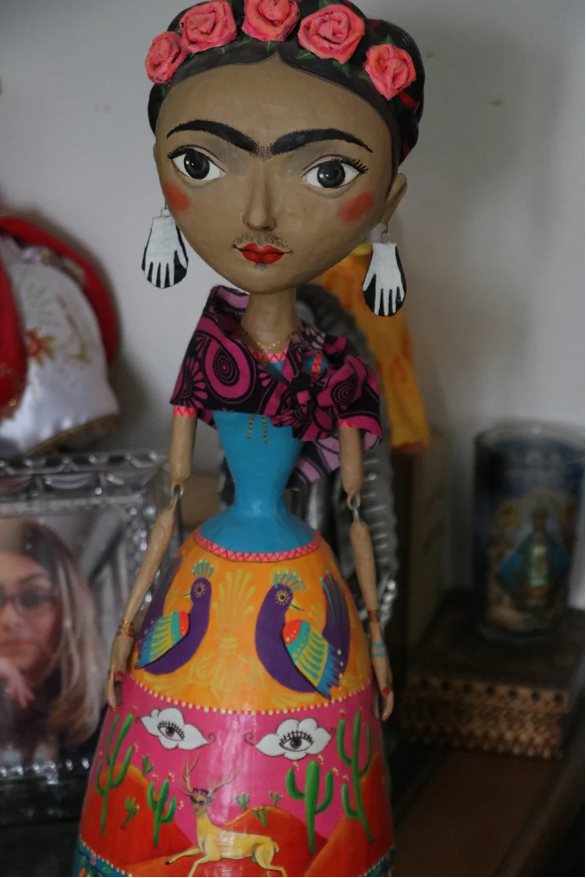
And while Chicago has one of the largest Native American urban populations in the United States, there is an extreme lack of representation, from a lack of education on Native American history in Chicago Public Schools, to a lack of exhibitions of contemporary Native American artists at the Museum of Contemporary Art.
While some of the histories of their people may have been lost to , time and often genocide, many are working with the knowledge they have to reclaim what has been lost.
Ana and Sergio, and Jessica Zapata are all part of a Nahua dance group that strives to follow traditional Nahua ceremonies, dances and other cultural practices to preserve the Nahua culture and dance.
Sergio taught himself leatherwork and how to sew traditional regalia and ceremonial items for the group. In doing so, he taught Ana, and they continued to collect books, stories and information from elders on any traditions and symbols related to their work.
“I get copal, sage or tobacco so there is always smoke around what I am working on,” Sergio said. “And for me, it’s a way to get my work close to the ancestors; the smoke creates a connection between us.”
Ana, when working on her pieces, details a sense of serenity and peace.
“I do also see it as a prayer,” she said. “Making art is already sacred, and sharing it with our people makes it even more sacred.”
This echoes throughout the work of various Indigenous artists. Their craft is not only a practice, but also an extension of their identity and culture. The craft itself begins to hold a sacred place in their lives and integrates into the day-to-day practices of who they are.
“You’re always going to see parts of the past, because our ancestors did that work for us,” Garcia said. “It’s a different type of technology that we’ve developed over centuries, but we can still apply it to our artistic practices. And now, since we’re living in a new environment, we adapt.”
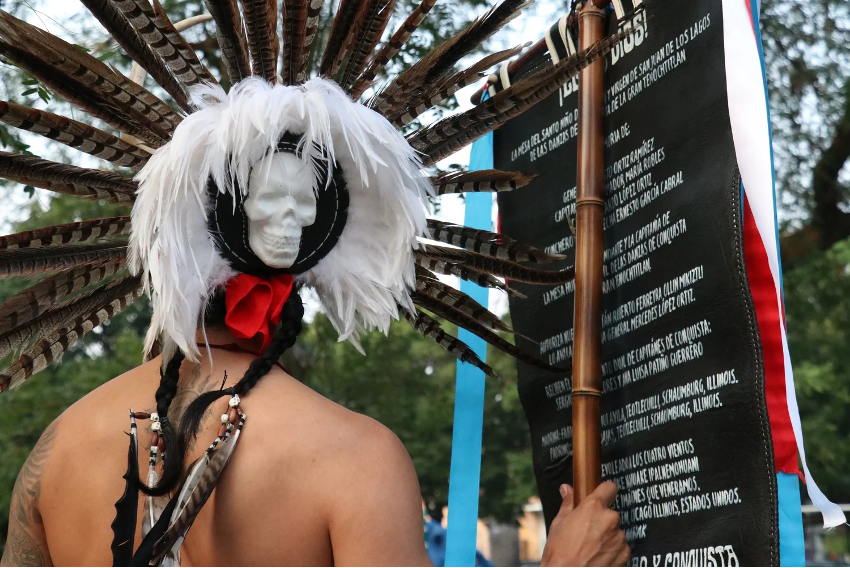
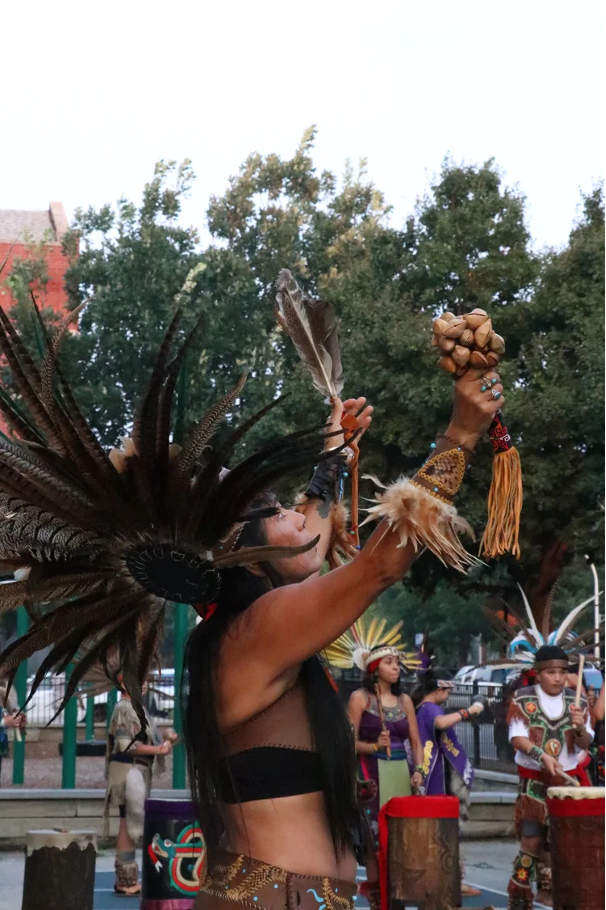
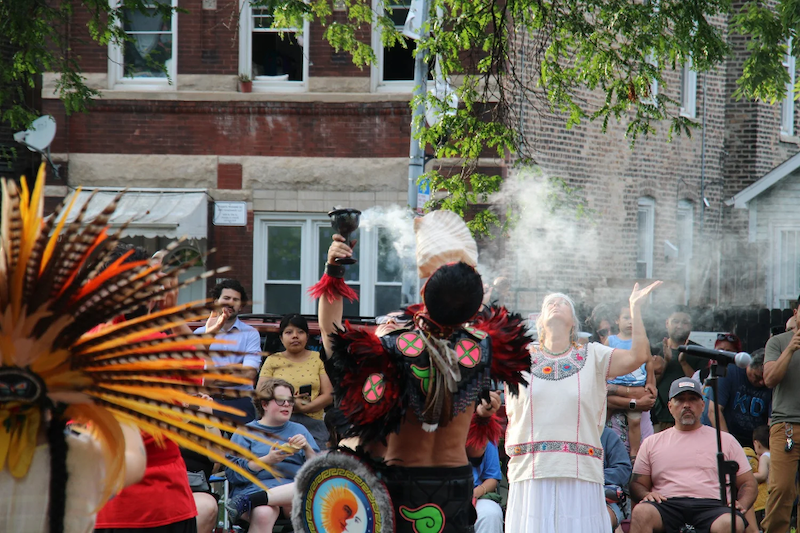
A member of Huehuecoytl gives thanks to Ometeotl, a Nahua god, during a ceremony (Jenna Mayzouni/MEDILL)
Jenna Mayzouni is a recent graduate of the Medill School of Journalism.