
By Monique Louis
Medill Reports
SAN JOSE, Calif. — How did Seattle Seahawks cornerback Nehemiah Pritchett learn how to track a football so well? By playing baseball.
At Jackson High School in Jackson, Ala., Pritchett was first-team all-state in both football and baseball. He said being his team’s center fielder helped him learn and master tracking the ball, an important skill he uses as a pass defender in the NFL.
“All sports translate together,” he said. “I don’t feel like you have to specialize in one sport.”
Pritchett went against the trend of training in one sport for the majority of a year. Those hoping to break through in an increasingly competitive collegiate and professional sporting landscape might feel as if specialization is the quickest, most dependable way to unlock elite status. But multiple studies and the experiences of several Super Bowl athletes point to a multi-sport athletic experience as the foundation to success.
National Athletic Trainers Association President AJ Duffy warns against specializing too young. When a young athlete plays multiple sports, it allows the muscle groups required in one sport to rest while challenging the muscle groups required in another sport, he said.
“Young bodies need rest so that they can grow and mature properly,” Duffy said. “No matter how good these young athletes can be, they are skeletally immature individuals who need to allow their body to grow and not over-stress certain areas by doing too much of one sport.”
Playing multiple sports as a young athlete is also good for skill development, as many skills are transferable across different sports, skills several NFL athletes are bringing with them to the Super Bowl this Sunday.
“Being a multi-sport athlete is the best thing you can do as a young athlete,” said Seahawks linebacker Boye Mafe, who played basketball and ran track in high school. “All kids should play multiple sports.”
According to a study published in the European Journal of Sport Science, approximately 64% of NFL players drafted from 2011 to 2023 played multiple sports in high school. In the 2022 NFL draft, 88.9% of draftees were multi-sport athletes in high school, per Tracking Football, a football data collection enterprise. Forty-three percent of players drafted that year played three or more sports.
Mafe said playing multiple sports helped him develop an array of skills he wouldn’t possess if he had stuck to just one sport.
“Footwork is key in basketball,” he said, explaining which transferable skills he brought with him to football.
Seahawks cornerback Riq Woolen said running track helped him the most. Woolen’s 40-yard dash time of 4.26 seconds at the NFL Scouting Combine ties for sixth all-time. His time is among the fastest for a prospect over 6 feet tall.
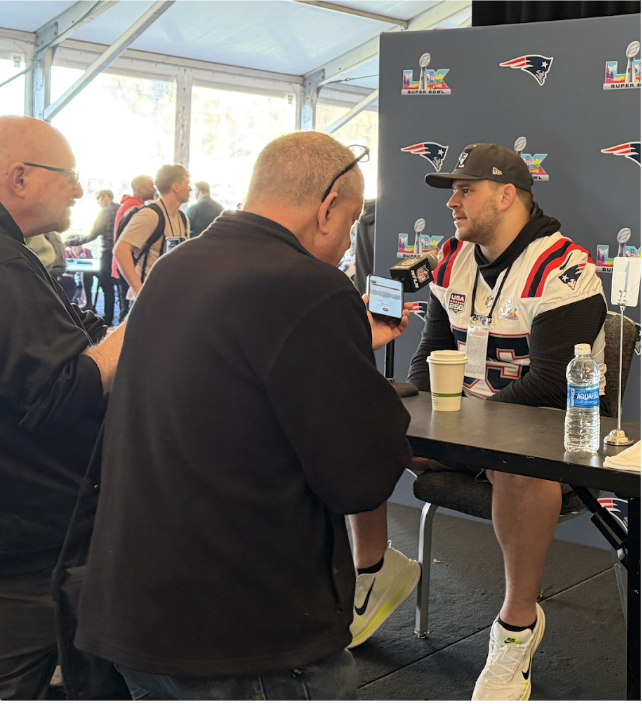
Several New England Patriots players echoed the experience of these Seahawks defenders. Punter Bryce Baringer said playing golf helped him perform when he was “jittery or nervous.”
“You’re standing on the 18th hole of a golf tournament, it could maybe feel like a big punt in a game,” Baringer said. “The mindset translates.”
The same study published in EJSS concluded multi-sport athletes “accumulated a broader foundation of motor skills,” due to the wide-ranging skills they obtain from playing several sports.
The study, which evaluated the relationship between early specialization in football and proneness to injury in the NFL, also indicated NFL athletes who specialize too early are more injury-prone. The results showed “Multisport athletes sustained fewer total injuries and major injuries compared to single‐sport athletes. Multisport athletes also played 12.2 more NFL games and had 0.7 additional career years.” In a sport where the average career is 3.3 years, per the Statista Research Department, the 0.7 figure is significant.
Duffy added reduced injury rates could be attributed to delaying, or preventing, overexertion of targeted muscle groups over the course of an athlete’s career.
“Rest is extremely important to not over-fatigue the muscles and joints, which need adequate time to recover and reenergize,” he said.
Diversifying athletic experiences also helps avoid burnout and curb the psychological stress specializing might induce, according to a study published in Sports Health.
“Let them be kids. Let them play and let them enjoy growth,” Duffy said. “As they grow older, they will find a sport that they want to home in on.”
“I had as much fun playing baseball as I did football in high school,” Patriots center Garrett Bradbury said. “I can’t encourage young athletes enough to play as many sports as possible. It’s the best time of your life.”
Monique Louis is a sports media specialization graduate student at Medill.