
By Olivia Craycraft
Medill Reports
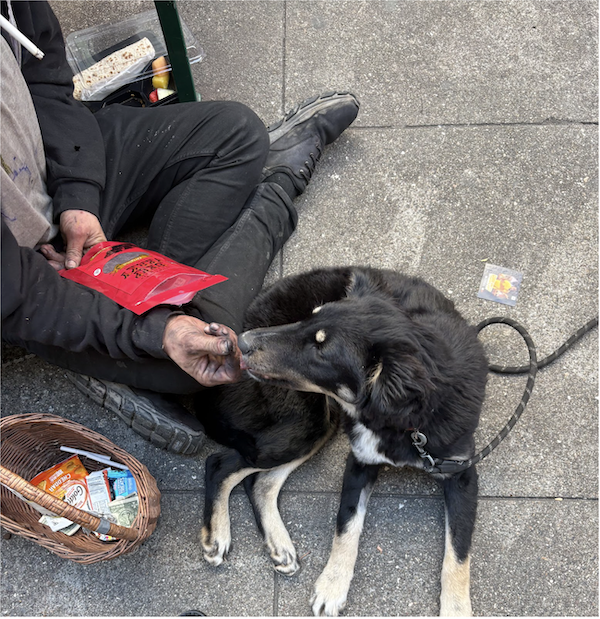
SAN FRANCISCO – The Moscone Center, in San Francisco’s Yerba Buena neighborhood, is the host of this year’s Super Bowl Experience, Pro Bowl Games and Media Center, which includes the famous Radio Row. Hundreds of security personnel surround the building, protecting many of the country’s biggest athletes, celebrities, journalists and the millions of dollars worth of equipment inside. Just one block away, Charles Smith, 34, and his 8-month-old puppy, Faith, have spent the week desperately trying to find a place to rest.
There are around 8,300 people experiencing homelessness in San Francisco, according to the most recent Biennial Point-in-Time Count in 2024. Major events in any city often mean added stress and turbulence for those living in shelters or on streets. In San Francisco, this has been a source of contention.
“When there’s big events like this, (the city) tries to hide poverty,” said Guadeloupe Velez, communication director of the Coalition on Homelessness. “They have more enforcement out on the streets, police enforcement, sweeps and property confiscation.”
When the Bay Area last hosted the Super Bowl in 2016, San Francisco was heavily scrutinized for the way it handled its homeless population.
There was a heavy law enforcement presence conducting sweeps and placements of homeless people in order to clear high-traffic areas. Many San Franciscans protested, pointing out how much of the $5 million in tax dollars allocated to Super Bowl 50 festivities could have helped people involved in the homelessness crisis.
Smith remembers Super Bowl 50 as another time he experienced hardship.
“It was bad then. They made it clear they didn’t care about us or our stuff,” Smith said. “Just pretty sidewalks and rich folks.”
He has lived in San Francisco for nearly 20 years. Recently, he has been sleeping at a halfway house that supports men battling opioid addiction. However, after his last treatment this month, he will be forced to leave. He said he anticipates having to sleep on the streets because no other shelter will allow him to bring Faith.
“That’s my daughter,” he said. “If she’s not welcome, I’m not welcome.”
Last week, Mayor Daniel Lurie’s team said that the Super Bowl will not affect their normal process of supporting homeless people and enforcing the law. Instead, the city will be expanding its Journey Home Program, which connects homeless individuals in San Francisco with relatives outside of the city and offers transportation to those relatives’ homes. Additionally, the Gubbio Project, a nonprofit that is typically only open during the day, has opened up 80 beds this week for people being pushed out of their usual areas.
Velez said while it is encouraging the city won’t be directly repeating what occurred in 2016, it may not mean exactly what it sounds like.
“I think when the mayor says, ‘Oh, we’re not going to be increasing enforcement,’ that’s because we’re already operating at a really high level,” Velez said.
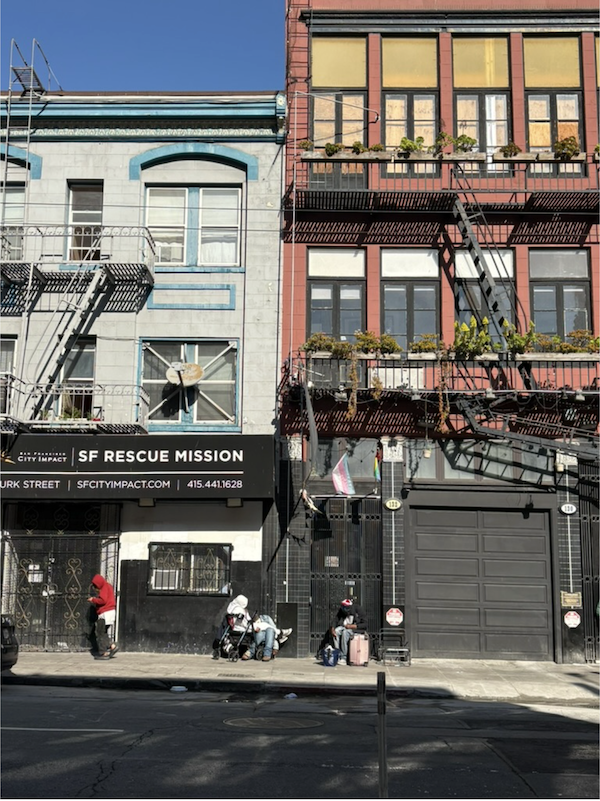
The Department of Emergency Management, which collaborates with local nonprofits, police and neighborhood street teams to leverage shelter and aid spaces for individuals battling addiction or homelessness, also said their approach isn’t changing due to the Super Bowl or any major event.
“The message this week, just like any other time, is that help is available today and always, and that today is a great day to come inside,” public relations officer Micaela Leonarte said.
However, Smith said he is being forced to move locations at a higher rate than usual. Earlier this week, when he and Faith were resting in the shade in one of their usual spots, he awoke abruptly to the sound of water.
“Some guy was powerwashing the sidewalk in the middle of the day just because we were there,” Smith said. “If Faith didn’t wake me up, all of our stuff would’ve been soaked. They didn’t do that before.”
Both Smith and the Coalition on Homelessness credit the 2024 Supreme Court Decision in
Grants Pass v. Johnson for the uptick in enforcement. The ruling made it legal to arrest or cite people for sleeping outside, even if there isn’t shelter or housing space available for them to go. Shortly after the ruling, California Gov. Gavin Newsom issued an executive order to increase the removal of encampments in California’s cities.
“This executive order directs state agencies to move urgently to address dangerous encampments while supporting and assisting the individuals living in them — and provides guidance for cities and counties to do the same. The state has been hard at work to address this crisis on our streets… there are simply no more excuses,” Newsom said in a statement on the social platform X in July 2024.
Since the summer of 2024, Smith said law enforcement will often tell him he must stand up or they will give him a citation. Smith said this has been affecting Faith, who is recovering from a broken leg.
Many organizations recognize the Super Bowl can mean anxiety-inducing changes for homeless people and are working to combat it. The Coalition on Homelessness has been handing out flyers informing people of their rights and informing them of what to do if the city violates them. It includes information about where confiscated belongings may be and notes the coalition will aid in retrieving them. Coalition leaders say they are focused on the small things that help ensure the dignity of homeless people.
“We continue to urge the city for more compassionate, driven and permanent solutions to the homelessness crisis,” Velez said. “During a week like this, when you have a big event, it’s just a reminder of the issues that are here all the time.”
As Friday came to a close with fans rushing into the Moscone Center for another evening of the Super Bowl Experience, Smith sat with Faith in his lap, watching the commotion.
Olivia Craycraft is a sports media specialization graduate student at Medill.