
By Paulina Marinkovic Camacho
Medill Reports
Down an alleyway on Palmer Street, past a nondescript door and centuries-old brick façade, a 500-year-old type of brandy, until recently little known beyond its homeland of Bolivia, is starring in one of the city’s most high-concept cocktail lineups.
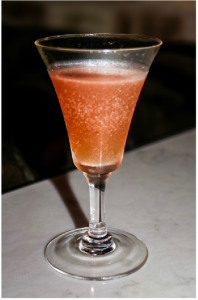
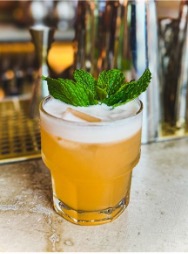
Quaoar mini-cocktail features
Singani 63. (Paulina Marinkovic Camacho/MEDILL)
At The Meadowlark, a Logan Square speakeasy renowned for its rotating themed menus, beverage director Abe Vucekovich debuted a collection of 17 solar system-inspired drinks. Among them is Quaoar, an aromatic sour named after the ringed dwarf planet found in the Kuiper Belt. Composed of apple-walnut orgeat scented with orange-flower water, Pasubio Amaro, lemon juice and finished with a hint of chartreuse (a potent herbal liquor), the concoction arrives in a stemmed cordial glass, echoing the celestial body’s diminutive size. At its core is not rum or gin but a lesser-known spirit touted by the film director Steven Soderbergh and native to Bolivia: singani.
“Some gins and rums can get lost with apple-walnut orgeat, but you still get the floral notes from singani,” Vucekovich said. “The Muscat of Alexandria (grapes) and the way it’s distilled add a really unique element.”
Singani is Bolivia’s national drink, but until recently, it remained a well-kept regional secret. Its journey from the high Andes mountains to the U.S. came only after an unlikely Hollywood detour — and now, it’s building a strong presence in Chicago, where cocktail connoisseurs gravitate toward niche spirits with heritage and character. Though a relative newcomer to American bars, singani is now stocked in more than 40 states, with Illinois leading in sales. In Chicago alone, 33 bars now showcase singani on their menus, most prominently in those serving agave-centric drinks or pan-Latin cuisine. From seasonal adaptations of the traditional chuflay (Bolivia’s go-to mix of ginger ale and singani) to experimental pairings like Meadowlark’s Singani Mai Tai riff, the floral, 80-proof liquor is introducing bar-goers to an entirely new category.
Often considered a relative to pisco, a clear-based brandy produced in Peru and Chile across regions and grape varietals, singani sets itself apart with a singular ingredient and a single origin. Bolivian federal law requires it be distilled exclusively from sweet white wine Muscat of Alexandria grapes, grown at a minimum altitude of 5,250 feet, within designated high-valley areas of the Andes.
Singani’s story begins more than five centuries ago in Cinti Valley, a region of red rock gorges south of the silver city of Potosi. Spanish colonial settlers and missionaries brought over grapevines, transplanting their winemaking traditions to the heart of South America.
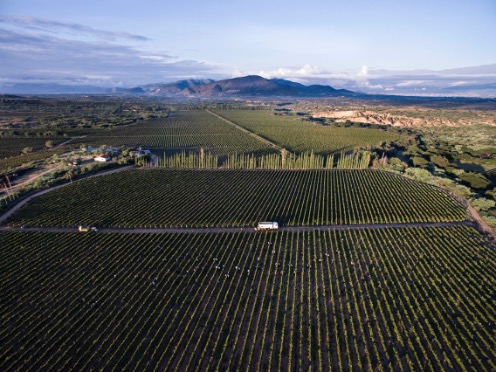
For generations, small-scale producers in the high inter-Andean valleys refined the craft, until, by the mid-20th century, production transitioned to Tarija, where the Granier family has been producing singani for 100 years. Founded in 1925, Casa Real is now Bolivia’s largest singani producer, where it’s remained a local favorite but never reached beyond its borders. That is, until a bottle of its floral elixir unexpectedly landed in the hands of an American Oscar-winning director.
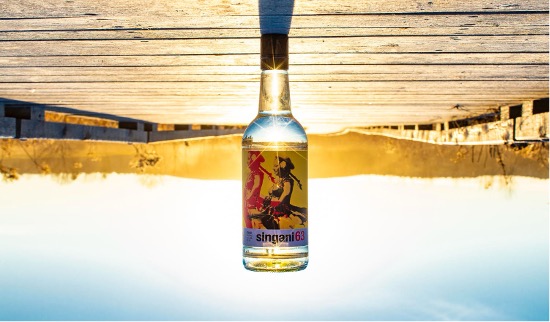
While shooting his 2008 biopic of Che Guevara in Bolivia, Soderbergh –– the filmmaker behind the “Ocean’s Eleven” trilogy –– received a bottle of Casa Real’s black label as a gift from his Bolivian casting director, Rodrigo Bellot. That serendipitous encounter led to what is now an 11-year partnership with Casa Real. In 2014, after six years of navigating U.S. regulations, they launched Singani 63 (named after Soderbergh’s lucky number and birth year) into the market, making it the first singani to be imported and sold in the U.S.
“The reason (Soderbergh) likes it more than his day job is because he’s telling somebody else’s story, he’s just the carrier of this history, this legacy, this culture,” said Lanny Grossman, who oversees the brand’s communications. “When he makes a movie, he has to create stories. Now he’s taking a story that’s been packaged and sharing it.”
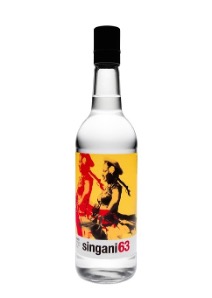
63 line. (Photo courtesy of Singani 63)
A fourth-generation distiller and Casa Real’s CEO, Luis Pablo Granier remembers childhood summers in Tarija, strolling the fields of Muscat vines with his grandfather, Don Lucho, who “knew the vineyard as if it were his own garden.” At home, the family’s clear brandy wasn’t only poured in celebratory occasions but also as a key ingredient in his grandmother’s herbal remedies and cherry-pie recipes.
For Granier, sharing singani beyond its borders meant telling a story that embodies centuries of Bolivian tradition and identity.
“(Soderbergh’s) creative vision and commitment to authenticity aligned with our purpose of preserving the spirit’s soul, while presenting it in a language that resonates with international consumers,” he said. “It was the union of two worlds: the tradition of a family distillery and the narrative and cultural reach he could bring.”
The essence of singani lies in its method: in careful distillation, in the origin of the Muscat of Alexandria grape cultivated at high altitudes and in the expert hands that craft it. At the Granier family’s bodega in Tarija, spanning more than 200 hectares of vineyards, the distillation process traces directly back to cognac’s double pot stills, performed twice to refine purity and increase the alcohol level.
Granier notes Bolivia’s extreme altitude is the very reason viticulture is possible here, as the heightened ultraviolet radiation causes the Muscat of Alexandria grapes to “develop thicker skins and a higher concentration of terpenes.” After harvest, the freshly crushed grape juice ferments for five to 21 days before distillation, a process that ultimately bestows singani with its signature “explosion of aromas.”
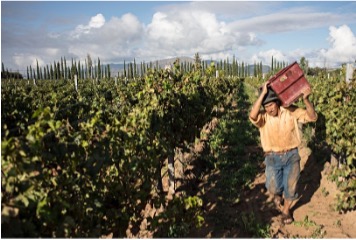
Preserving the spirit’s tradition was crucial for Granier; adapting to the international market meant finding a way to meet regulations and standards without compromising the identity of the product.
“What makes (singani) Bolivian is its history, the way it has accompanied celebrations, traditions and generations,” he said. “It is the climate, the altitude, the way we work the land, but it is also the emotional bond we have with it. Singani is a cultural expression, a way of saying ‘this is who we are’ through a unique aroma and flavor.”
Since its launch, Soderbergh pushed to give the spirit its proper due, insisting to acknowledge the product’s cultural and geographical specificity, rather than falling under a subcategory of brandy. In January 2023, following an eight-year effort in association with the Bolivian government, the Alcohol and Tobacco Tax and Trade Bureau finally recognized singani as its own category.
For the first time, the spirit could be labeled simply as singani rather than a generic form of brandy, positioning it next to cognac and pisco on a global scale.
“When you walk into a liquor store, there’s a vodka shelf, a tequila shelf, a gin shelf – there should be a singani shelf,” Grossman said. “On the back bar, there should be a singani section to be treated as the next base spirit.”
Today, this Bolivian eau-de-vie is carving out a place within the U.S. bar scene (and even U.K. pubs), right next to mezcal and pisco. In New York, trend-driven bartenders lean into the craft cocktail culture, opting for theatrical presentations, whereas in L.A., its Hollywood backstory creates an immediate affinity for the product. But in Chicago, the emphasis tends to be more on the gastronomic experience and pairings, with a “special appreciation for craftsmanship and well-made products,” Granier said.
The Windy City’s cocktail renaissance, fueled by a cultivated taste for tequila and mezcal, and sustained by its large Latin American population, has proved a leading market for this Bolivian import. Largely shaped by its Prohibition-era corner taverns, Chicago’s drinking culture has seen a shift toward avant-garde mixology in the past decade.
From tasting-menu-style programs to clandestine speakeasies, there is currently a demand for boundary-pushing venues, says Jacob Leyba, spirits specialist at Winebow. This emphasis on offering guests an immersive experience, he says, resembles mezcal’s steady ascend in the mid-2000s, when bartenders began shifting toward new flavor profiles.
“The cocktail resurgence is what cemented mezcal where it is now,” he said. “Singani has a similar trajectory in that it allows programs that take pride in hospitality to guide guests through an experience that also introduces them to something new.”
The Meadowlark’s repertoire has featured singani since its inception in 2022, but Vucekovich first encountered the spirit four years earlier, at a seminar hosted by Soderbergh at the now defunct cocktail bar The Violet Hour. At the time, pisco was a “bartender’s darling,” he says, but singani’s high-altitude origins bring a distinct orange blossom and herbal spice and, just as importantly, a vehicle for storytelling.
“Its roots (and) distillation method, it all comes together to create a distinct tasting experience,” he said.
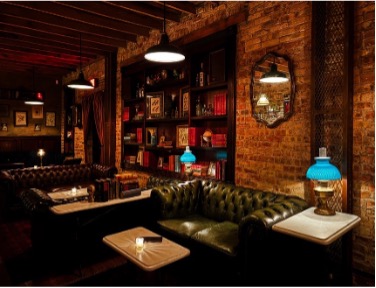
Each cocktail in the venue’s fourth menu, “Ad Astra” (“To the Stars”), released in July, is crafted with ingredients that evoke the properties of planets and other celestial bodies. When creating Quaoar, Vucekovich turned to ingredients sourced from high altitudes, with singani as its base spirit to hint at the icy dwarf planet’s elevated terrain.
“Quaoar is named after one of the Native American creation gods that created mountains, so we wanted to reflect that,” he said. “A spirit from a high altitude, celebrating the topography of this little planet out there.”
But at his West Town bar, Friends of Friends, which opened in May, Vucekovich trades planetary metaphors for two-word descriptors, with cocktail names like “Herbal & Zesty” to make its menu of esoteric ingredients more approachable. This drink layers Singani 63 with TRÄ•KÁL, Italicus, green tea, yerba mate and house-made sparkling ginger beer. Vucekovich notes singani’s floral notes are a unique asset, as most spirits would easily get lost within more dominant flavors.
“If you want an espresso martini and don’t want to think, that’s great,” he said. “But if you want conversation and the surprise of something new, that makes spirits like singani special.”
Drinkers who grew enamored with agave-based spirits are branching out into adjacent regional bottles like pisco, cachaça and, now, singani. Leyba notes with mezcal now mainstream, tequila surpassing vodka as country’s top-selling alcohol and American whiskey declining in sales, it’s an opportune timing for Bolivia’s brandy.
“Singani fits where tastes are going, it’s clear, unaged and really just showcases the base ingredient, that Muscat of Alexandria grape,” he said. “The market conditions right now are perfect for it to have a moment and start making its way into households.”
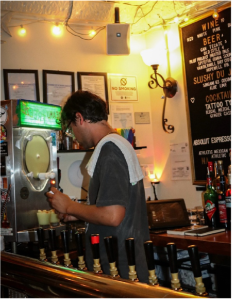
machine across all four U.S. locations. (Paulina Marinkovic Camacho/MEDILL)
As tequila soars off the shelves and mezcal enthusiasts seek spirits with the same range of aromatic notes, Chicago bars have started to largely embrace singani for its reputation of being highly adaptable in cocktails. A 750-milliliter bottle of Singani 63 (25.4 ounces) is priced at around $35 retail and $23 wholesale, according to Winebow.
Its floral notes can replace any clear spirit like tequila or vodka, and elevate classics like a negroni or a mule, says Jarred Craven, Singani 63’s Midwest market manager, positioning it at a relatively accessible price point, especially for smaller bars that might be unable stock multiple niche bottles.
“It’s very easy and versatile, I like to say it wears a lot of hats, it plays well with others,” he said. “It could be the star of the show or a supporting character.”
Across Chicago, beverage teams cite strong curiosity since introducing singani to the menu. In Avondale, Mother’s Ruin, an upscale dive bar popular for its seasonal spiked slushies, added singani to its rotating flavors in August.
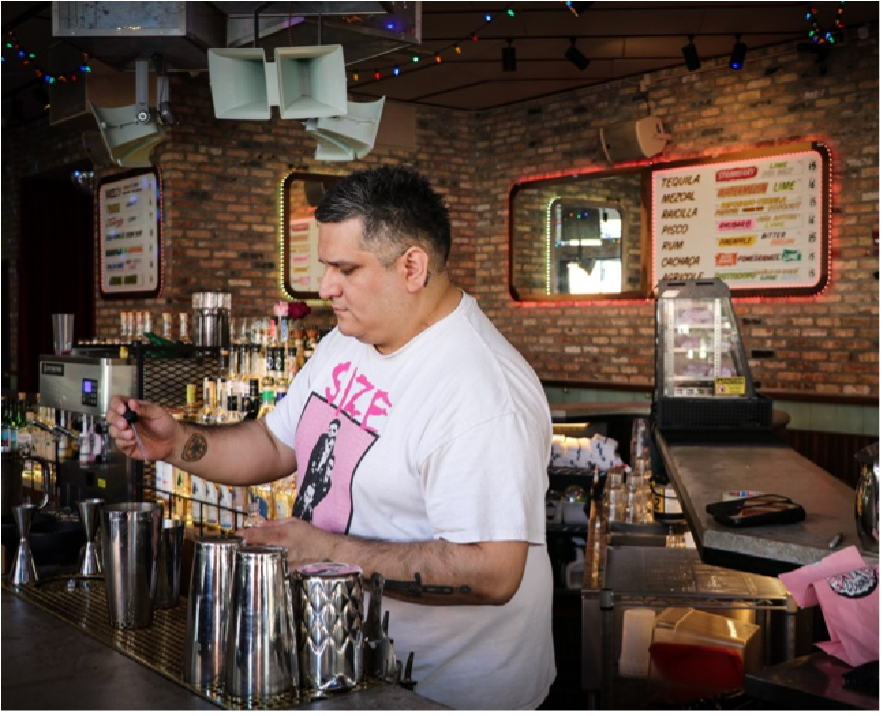
Behind the backbar’s jumble of bottles stacked and gilt-framed mirror, the main appeal is the glowing slushy machine whirring its latest “Slushy du Jour” –– the Keanu Freeze. The frozen beverage is fundamentally very simple: Singani 63, cucumber, aloe, lime. But substitute singani for the usual margarita or daiquiri base, general manager Keith Popejoy notes, and the $13 slushy instantly feels elevated.
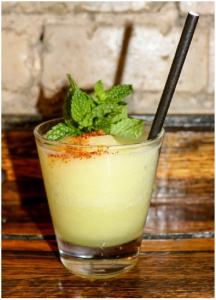
“Singani has such a dynamic flavor that it was really easy to piece this one together — bright, summery,” he said. “The aloe acts as a melody of cantaloupe or honeydew, and the cucumber is light, refreshing, especially when frozen into a slushy. I’ve done the same slushy with gin before, and I will never do it with gin again.”
Though the muscat liquor only recently made the lineup in August, Popejoy notes Chicago’s alcoholic slushy is outselling those in Mother’s Ruin’s sister locations –– New York City, Nashville, Austin –– despite their multiple machines. He credits its success to the recipe and the exotic brandy’s history, an immediate conversation starter among curious customers trickling in during happy hour.
“I always look at alcohol as a liquid time machine,” he said. “There’s so much history behind every bottle, and it takes you places. You’re from Bolivia, you drink singani, you go home for a while.”
In Bolivia, the chuflay cocktail remains the most classic expression of its national drink. Poured over ice, ginger ale fizzing to the rim and a lemon wedge, the highball travels from wedding tables to Carnival parades, and onto boards of late-night cacho, the country’s popular dice game.
Chicago’s Estereo, an all-day Latin-inspired bar, pays tribute to that tradition, serving its own version. The music-driven cocktail bar now devotes a month of its menu to the chuflay, running mid-July through August.
Both its Logan Square original and newer Fulton Market venue lean into a retro-modern decor, layering string lights and neon signs with a mirrored disco ball, while DJs play Latin and Afro-Caribbean records from the ‘60s and ‘70s, all on vinyl.
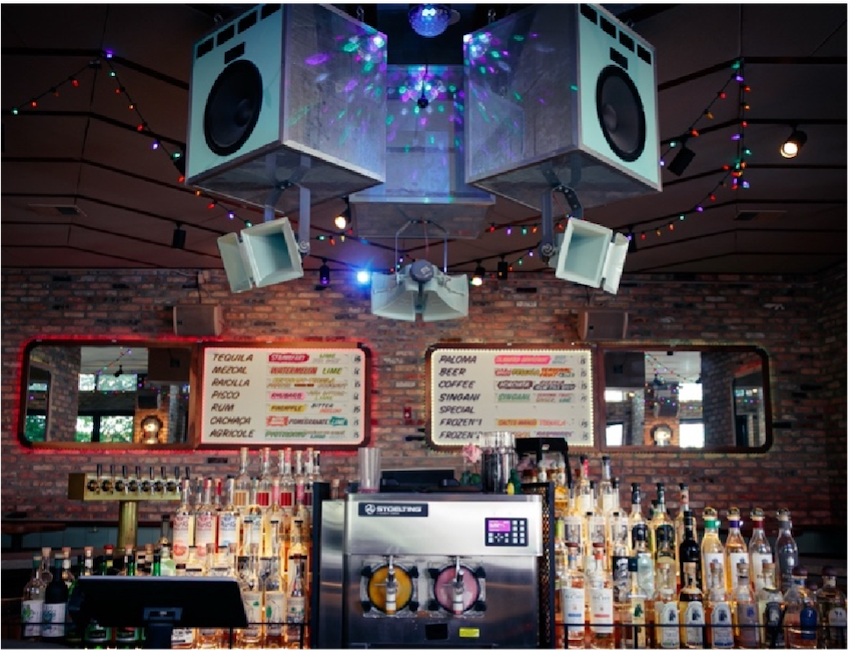
The menu features 14 Latin-inspired cocktails, each one named for its base spirit –– pisco, mezcal, tequila. Singani, tucked among better-known liquors, often sparks questions from guests, says beverage director Guillermo Martinez, as few have heard of Bolivia’s national spirit. But the recipe keeps it simple: Singani 63, ginger, lime, cane sugar and mineral water, finished with that week’s seasonal fruit (recently tart cherries from Seedling Farm) infused directly into the bottle.
“People come in not knowing what singani is, but the way the cocktail is presented makes it approachable,” Martinez said. “Ginger and fruit make that bridge easy to walk, we’ve had guests crush five or six in one sitting.”
For Martinez, singani’s “versatility and bright aromatics” are clearest in the Breezy, a choose-your-spirit cocktail infused with cold brew yerba mate, house falernum, lime and carbonation. It’s how he often prefers to dink it, and lately some regulars have even started requesting singani in place of rum.
“Someone laid out cocktails to me like Legos, you got to have a piece that fits into the other one, even if it’s a different color,” he said. “Singani is one of those pieces. Anything gin-based or pisco-based, it goes so well to start changing and developing a cocktail.”
The spirit’s novelty draws in patrons, though it’s still an ongoing effort to introduce singani to those unfamiliar with it. That irony ties neatly to Singani 63’s deliberately provocative tagline, “What The F**K Is Singani 63?” Both a statement and a question, it captures the essence of the spirit itself.
To educate the U.S. market and build its presence in Chicago, the brand organizes Chuflay Week, a celebration that invites a dozen bars to reinterpret Bolivia’s beloved ginger ale highball.
“No one had ever heard of it,” Grossman said. “Everyone knows what tequila is. Everyone knows what vodka is. Everyone knows what gin is. But no one has any idea what singani is.”
Last year, the weeklong celebration closed at Estereo’s Logan Square bar Aug. 6, commemorating the 200th anniversary of Bolivia’s Independence Day. Bolivian flags hung above the U-shaped central bar for the night, as DJ Ben Kruse spun records from native his La Paz and Cochabamba. Café Estrella, the city’s only Bolivian pop-up restaurant, served salteñas and other traditional dishes across the counter.
“We want to have that identity from the maker and show that people made it with love,” Martinez said. “In these walls we want to have things that have character, show stories behind it and bring communities together.”
Events like Chuflay Week, Martinez adds, create space to celebrate Latin American culture beyond the regions Chicagoans may be more familiar with. For Luis Palacios, a second-generation Bolivian American, singani’s recognition in the U.S. is a way to share those family traditions.
“My dad still has a bottle of Don Lucho (Casa Real’s special edition singani) saved for when I get married,” Palacios said. “A lot of my family enjoyed it over games of cacho, and now I’ve been able to share it with my friends here, Chilean, Peruvian, African American. It’s just a nice memory of home.”
Palacios also serves as vice president of Renacer Boliviano, a cultural association that for nearly three decades has organized festivals, folkloric dance performances and Independence Day celebrations to preserve Bolivian traditions in the city. Last year, the group partnered with Singani 63 for its Carnival parade, a collaboration he describes as a way to finally toast with Bolivia’s national spirit.
“Before, people had to bring (singani) all the way from Bolivia, and some years we went without,” he said. “Now we can walk into a store here and serve chuflays made with real singani at our events. It feels different like we’re finally sharing something that’s truly ours, not just improvising.”
Granier says this recognition abroad generates a renewed sense of pride and reshapes how Bolivians view their own national spirit.
“What makes me most proud is seeing how a tradition born in our land, with our grapes and our hands, is finding its place on international bars and competing on equal terms with iconic spirits,” Granier said. “Every bottle of Singani 63 abroad is a liquid embassy that tells the world who we are.”
Paulina Marinkovic is a recent graduate of the Medill School of Journalism.