

By Jessie Nguyen
Medill Reports
VIENNA — In the midst of the Vienna winter, city life is as vibrant as ever. Commuters biked along the Ringstrasse as riders patiently lined up for a tram at one of Innere Stadt’s more bustling stops.
When it comes to sustainability, no city does it like Vienna.
Only 1 in 3 Viennese owns a car as three-quarters of all trips in the city are made on foot, by bicycle or public transport, according to the Vienna Climate Guide.
Vienna’s 1,500 water fountains — about one for every 1,334 residents — reflect the city’s deliberate effort to reduce reliance on bottled water, according to the Vienna Smart City Strategy.
Today, Vienna’s waste management system has saved more carbon dioxide than it emits by implementing a circular economy, which focuses on waste elimination and extending a product’s life cycle through recycling and repurposing, essentially turning waste into resources.
But Vienna’s sustainability efforts extend far beyond waste management, cementing its plan to become the world’s most livable city.
Since 2020, the city of Vienna has been on a path to achieving climate neutrality, a goal it set out to accomplish by 2040. The city aims to recycle 100% of its non-avoidable waste by 2050.
By 2030, Vienna expects to increase the average life expectancy by two years and cut down 50% of all food waste.
Many Viennese entities, such as MATR, a mattress company and pioneer in circular economy solutions, welcome these ambitions. MATR produces mattresses using recycled polyester fibers that visibly reduce emissions at each manufacturing stage.
Four years ago, when MATR co-founder Michaela Stephen learned that 30 million mattresses end up as waste every year in Europe, she decided it was time for change.
“If you put them on top of each other, it’s 20,000 times the Eiffel Tower,” Stephen said. “We were like, ‘Oh my God, what is going on? Why does this huge mountain of waste exist and why does no one seem to know about this?’ And that’s how MATR was born that weekend.”
In recent years and specifically after the pandemic, Vienna’s startup ecosystem has bounced back stronger than ever with technologically advanced creations, such as smart mattresses and virtual reality training, combining modern solutions to global challenges with sustainability.
Startups that center around climate resilience have been incorporating green concepts in their operations to continue fostering a sustainable future. Spanning various sectors like arts, business and technology, enterprises like MATR are helping the city create change from the heart of Austria.
Vienna heads into its fifth year of climate protection commitment
Since the 1970s, the annual mean temperature has increased by roughly 2 degrees Celsius in Austria and by 3 degrees Celsius in Vienna, according to findings in the Vienna Climate Guide.
But scientists said Vienna will further warm up by up to 4 degrees Celsius, or 39.2 degrees Fahrenheit, at the end of the century, bringing downstream repercussions on health and quality of life among other implications.
“The climate crisis is the biggest challenge of our times. Temperatures are rising on our planet and the consequences are becoming more and more tangible – heat, droughts, extreme weather events,” Jürgen Czernohorszky, executive city councilor for Climate, Environment, Democracy and Personne, said in the guide. “This crisis affects us all, and therefore we can only deal with it together.”
In the past couple of years, rising temperatures, along with an increase in urban development, created the heat island effect in Vienna, where the city center experiences significantly higher temperatures than surrounding rural areas. The city’s ongoing efforts to ease the effects and bring about cooler temperatures include planting trees and spraying mist showers, according to the Vienna Heat Action Plan.
Adopted five years ago by the Vienna City Government, the Smart City Wien Strategy builds upon the United Nations Sustainable Development Goals and outlines strategies for Vienna to reach net zero carbon emissions in the next two decades.
Last year, four years into the implementation of the strategy, Vienna ranked second behind Switzerland’s Zurich in Mercer’s assessment of the world’s most livable city. The city’s abundant green oases and excellent infrastructure are some of the factors that contribute to Vienna’s high quality of living.
Focusing on Vienna’s transition to a circular economy, the guide proposes the city gear up for a new economic approach that further attracts investments and talent in the employment sector.
With a framework that incorporates environmental factors, Vienna brings a wide range of incentives such as startup funding, subsidy schemes and advisory services, serving the city as a “springboard into new global markets.”
OekoBusiness Wien, an initiative by the Municipal Department for Environmental Protection, is an environmental service package for Viennese companies that supports them in their green transformation. The consultancy service — providing environment-friendly practices and services — has helped more than 1,000 local businesses save more than 740,000 tons of carbon dioxide and reduce their operating costs by 167 million euros ($212 million) since it was launched in 1998.
Unverschwendet, a sustainable startup dedicated to eliminating food waste, benefited from the support of OekoBusiness Wien. In 2023, after participating in the joint Re:Wien initiative by OekoBusiness Wien and Impact Hub Vienna, the startup reported saving tons of food and cans and turning them into new products like jams, pickles and syrups. Today, Unverschwendet has worked on repurposing more than 10 million kilograms, or more than 22 million pounds, of fruits and vegetables.
OekoBusiness Wien currently manages more than 15,000 environmental projects. Program manager Bertram Haupler said the service has been able to balance between companies’ objectives, eco-conscious milestones and federal regulations.
“There are a lot of different legal requirements for companies,” Haupler said. “You have to fulfill all these (environmental) laws as a legal baseline, but if you really want to be an eco-business company, you have to do more than what is legally required.”
Climate-oriented startups and entrepreneurs have been taking Vienna by storm in recent years
A hub for sustainable business models and green technology entrepreneurs, Vienna saw more than 5,000 new startup registrations in 2022 compared with 18,000 in the entire country, according to Statistics Austria.
Last year, the startup sector brought Austria more than 578 million euros ($733 million) in investments, with 68% of the funding invested in young Viennese companies, according to EY Startup Barometer 2024. Taking up 61% of total investment volume, Vienna ranks first as an Austrian region with the highest market share of startups in 2024, while Upper Austria ranks second with 18% and Lower Austria comes in third at 6%.

At the forefront of strengthening Vienna’s startup ecosystem is Impact Hub Vienna, a global collaborative network whose mission is to support social entrepreneurs and foster a community for local talents.
In June 2024, Impact Hub partnered with Deloitte Austria to launch Grow, an accelerator program for selected climate startups to address the effects of climate change through various means, including developing sustainable products and practices, and promoting renewable energy.
Impact Hub defines a climate startup as “a new business venture focused on developing and implementing innovative solutions to address climate change and its associated challenge.” Mustafa Ozer, the hub’s expert and content manager, said its potential and ability to scale faster sets a climate startup apart from a climate enterprise.
“It’s not just the business prospect in the climate or the holistic planetary solutions, but the value created not just for the people or society but also for the environment,” Ozer said.
Within Impact Hub’s wide range of programming, Climate Lab stands out as the hub’s green initiative at the intersection of climate neutrality, business collaboration and innovative solutions.
Climate Lab — a joint creation by the Austrian Climate and Energy Fund, the Austrian Ministry of Climate Action and Energy, Wien Energie, EIT Climate-KIC and Impact Hub — seeks to bring together climate stakeholders to work toward climate goals like circularity, energy mobility and green jobs.
“Climate Lab sees itself as a facilitator of these things,” said Lara Roth, community lead at Climate Lab. “We’re trying to reach change from all directions.”
From the direction of circularity, MATR, a Climate Lab member and an innovative startup, is trying to scale zero-waste management one mattress at a time.
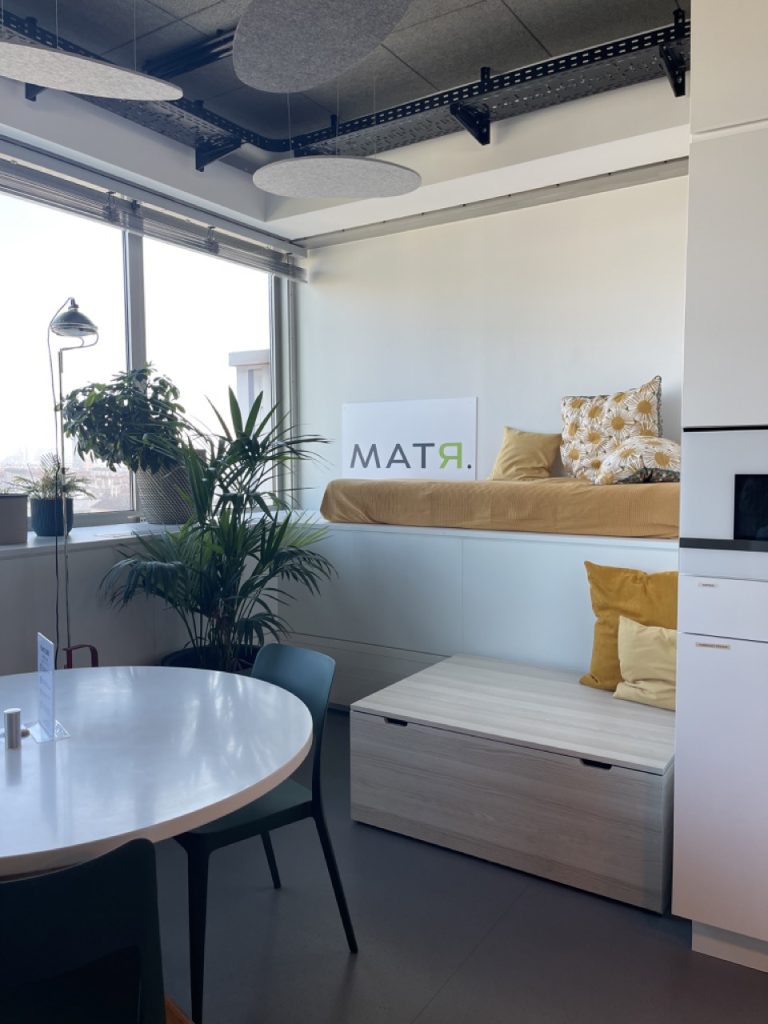
In a business-to-business model, Stephen said the average lifespan of a mattress at hotels and accommodations is four to eight years, depending on their standards. For consumers, a mattress can last anywhere from 10 to 15 years.
The idea of tackling mattress waste and overconsumption had been in the works for a couple of years when it lent itself to the official launch of a climate tech startup in 2023. Focused on simplifying end-of-life processing, MATR integrates product design innovation that ensures mattresses remain circular — avoiding both incineration and landfills — while keeping costs competitive.
“On average, we have 40% less carbon dioxide per mattress compared to a normal mattress on the market, so by showing that we can achieve those carbon dioxide savings, we are therefore obviously creating a better impact for the planet and thus the climate,” Stephen said. “I’m a strong believer that in order to drive impact, you need to have a business model and make money; otherwise, it doesn’t work.”
For European blue-collar workers, ecoTRN is driving that impact through the fulfillment of green jobs. The Austrian Ministry defines green jobs as jobs that seek to minimize environmental damage and preserve natural resources.
The Austrian Institute of Economic Research projects that 15,000 new green jobs will be created every year by 2032, a demand European countries are struggling to catch up to.
The lack of credentialed specialists and long and “formalized” training courses are some factors responsible for these labor vacancies.
Determined to solve labor shortages across Europe, ecoTRN offers virtual reality training, e-learning and classroom instruction for workers in electrical engineering, heating and cooling technology and building installation. Offered in both the fields of energy and heat, these modules include real-time interaction with energy systems, various weather and environmental scenarios, and simulation of heating and cooling systems.
Founded in January 2024, the Vienna-based startup allows skilled specialists to practice certain movements like installing a heat pump, without the technical hassles like carrying proper gear or being on-site.
“You don’t need to train on real facilities — of course, you cannot do the whole training in virtual reality, but you can do part of the training and skills training,” said Jakob Sellinger, founder of ecoTRN. “In some parts, we’re pioneering because we’re trying to disrupt or change how people are trained.”
Kunst Haus Wien pioneers sustainability in arts and ecology
Nestled in Vienna’s vibrant Landstraße district, Kunst Haus Wien is home to the largest collection of works by renowned Austrian artist and architect Friedensreich Hundertwasser.
The museum’s vibrant exterior, adorned with colorful mosaics and uneven tiles, invites the curiosity of passersby while its interior keeps them lingering through green spaces.
Following a spiral staircase to the second floor, visitors are greeted by Kunst Haus Wien’s 10 “tree tenants” that breathe life into the space, paying their rent in oxygen.
“We suffocate in our cities through poison and lack of oxygen. We systematically destroy the vegetation which gives us life and lets us breathe,” read a description on the wall at one of the tenant’s corners. “The tree tenant pays his rent in much more valuable currency than the humans.”
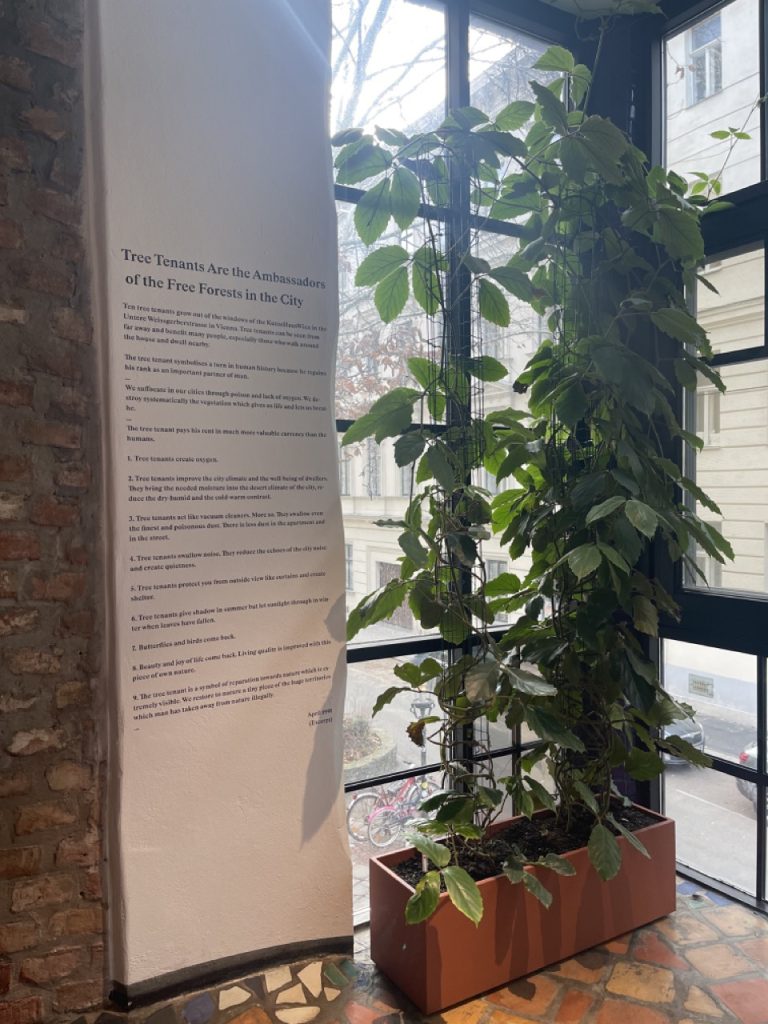
Scattered across the five-floor building, the 10 tenant corners blend contemporary art with sustainability in a constant attempt to incorporate greener, more eco-conscious efforts in Vienna’s daily operations. These tree tenants are among more than 260 different types of plants the building currently hosts, according to sustainability coordinator Alexandra Guth.
Kunst Haus Wien first opened in 1991 as an “ecological museum” preserving Hundertwasser’s ideas of ecology and sustainability through artistic medium.
The first of 17 green museums to be awarded the Austrian Ecolabel, which stands for high environmental quality and quality of life of a highly significant service or product, Kunst Haus Wien is supported by Vienna’s Department for Cultural Affairs to continue carrying out “the highest possible ecological standards.”
The museum has supported sustainable actions through its climate-centered programming, like hosting sustainability exhibitions, tending to the growing tree tenants or participating in the global climate protection movement Museums For Future.
In 2024, Kunst Haus Wien underwent a six-month renovation to switch from fossil fuels to renewable energy. The transition cut 75% of the museum’s energy consumption and three-quarters of its energy costs by using groundwater to heat and cool the building.
“When we say renovation, of course we wanted to respect the architecture, not destroy anything the artist himself planned. But on the other hand, there are new standards. … This renovation was (because) we wanted to be sustainable in the energy we use,” Guth said.
Looking ahead
Vienna has, multiple times, secured one of the top spots as the world’s most livable city based on a variety of reputable assessments, rankings and indexes.
Last year, Vienna ranked first in the Economist Intelligence Unit’s global livability ranking for the third consecutive year. Along with 172 other cities in the world, the city was assessed based on five categories: stability, health care, culture and environment, education and infrastructure.
These milestones might not come as a surprise to Stephen, who said she has noticed the city’s positive attitude toward climate action. Stephen said Viennese people, and even the general public of Austria, realize sustainability efforts are “a long-term gain.”
“That’s what I really admire,” she said. “There’s so many changes happening all over the world that in some cases, sustainability is getting put on the back burner, but I don’t think it will change so much, because what sustainability, and, especially in my opinion, circular economy proves is you can actually make an economic model out of it.”
Stephen added, “We need to start now to be able to get the benefit that keeps us ahead in innovating (in sustainability).”
When it comes to sustainability, no city does it like Vienna, especially with the help of the Austrian government through legislation and federal regulations.
In Austria, one of the environmental laws requires companies with 200 employees or more to have an energy management system as part of a corporate social responsibility directive. Haupler, who has been with OekoBusiness Wien for 16 of the company’s 25 years, said he found this requirement to have a positive impact on promoting sustainability in the country.
“It’s quite sure what we did the past 25 years helps a little bit in reducing the impact of companies on the environment, but it doesn’t change a lot,” Haupler said. “There’s a lot of players working on the (sustainability) field — from the European Environmental Ministry to the Viennese policymakers to the Environmental Department — it needs a lot of effort to change the way we do economy.”
Jessie Nguyen is a graduate student at Northwestern Medill specializing in investigative journalism. You can follow her on X at @jessienguyeen.