
By Simone Roberts
Medill Reports
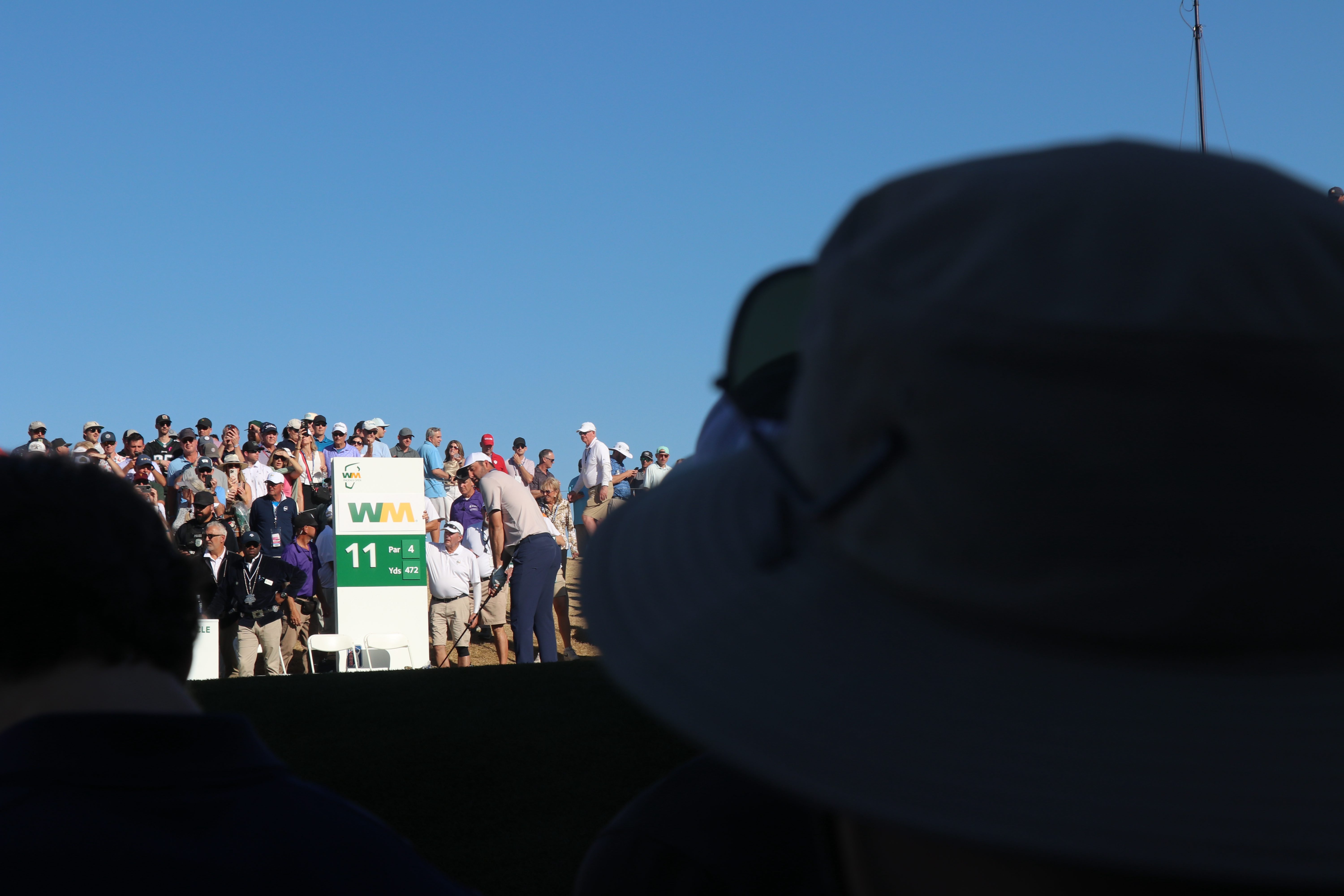
Just feet away from the famous par-3 16th hole at the WM Phoenix Open is the one no one talks about. The 11th hole is hard not just because it’s a long 482-yard stretch laced with water and sand but also because of the sound from the 16th — a noise reminding golfers of where they will be in five short holes.
“Whenever you hear a roar, you’re always looking over there,” WM Phoenix first-timer Michael Thorbjornsen said. “It’s a different beast over there. It really draws your attention.”
But 11 is a beast in itself, presenting its own challenges despite being in the shadow of its more rambunctious, attention-getting big sister.
No 16. is famous for its hole-in-ones, beer showers and coliseum seating, overshadowing the other holes at the tournament. It met expectations during the second round Feb. 7 when Argentina’s Emiliano Grillo hit a hole-in-one. The sound may reverberate, but some don’t let the chaos shake them.
Five holes behind Grillo, Canada’s Corey Conners was teeing off at the 11th.
“I was pretty certain it was an ace. I wasn’t totally certain. There’s roars for various reasons,” Conners said.
One way or another, 16 can affect a golfer’s concentration.
“There is always some chaos when you’re on 10 green and 11 tee, making it even more difficult,” Conners said. “There’s a lot of people around the tee. It’s definitely lingering in your mind there, but it’s (the 11th) a very challenging hole. The tee shot is very demanding.”
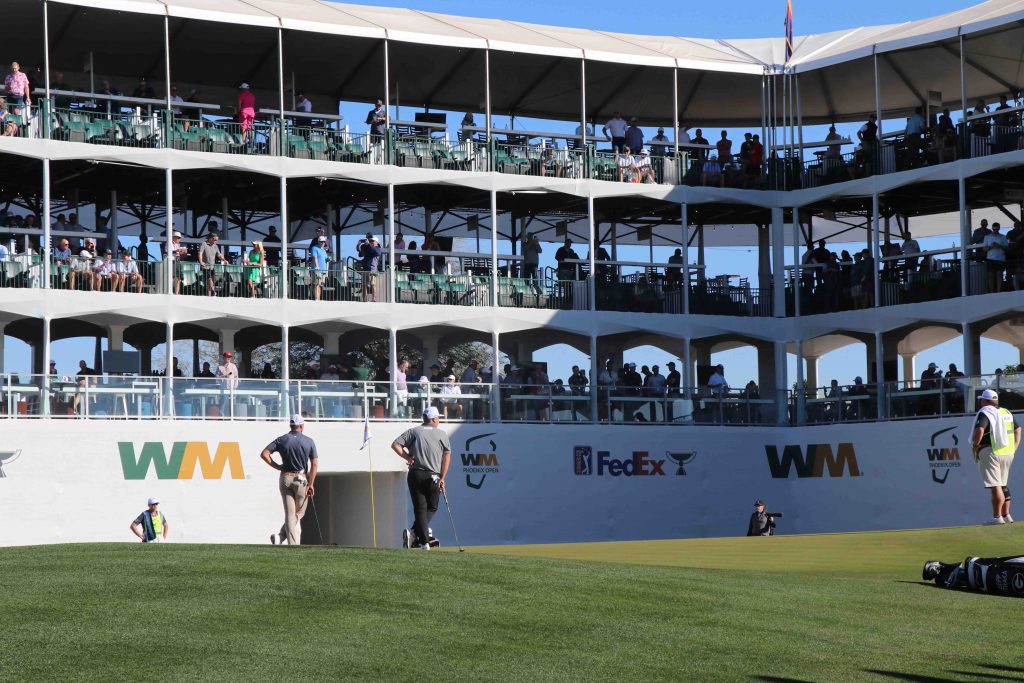
“I actually think the 16th hole is one of the easier holes,” said Jeff Hamley, U.S golfer Andrew Novak’s caddie. “The reason is, the fans are in the stands. We know they can’t get to us. They aren’t on top of us so it’s actually a calming hole where we take a deep breath.”
With crowds inches away and a literal shadow cast by the 16th’s grand stands, the 11th can be harder to succeed on. Fans even encircle the 11th tee box, walking with golfers from the 10th.
“The hardest part is the grandstands block the wind,” Hamley said. “So the caddies have a tough time knowing exactly where the winds are coming, because we can’t see the flags. We can’t see anything that shows us.”
Despite the “quiet please” signs held up by volunteers, fans jeer at golfers as they watch their shots fly from a distance.
“The crowd, it’s a crazy week. It’s one of the best weeks in golf,” said Drew Cohen, Thorbjornsen’s caddie. “Ten and 11, you definitely have a lot of fans watching you, so you have to focus up and execute and hit a good shot.”
At 112 decibels on the 16th, the 11th hole had a decibel level of 101.4, and that was just when general admissions fans were yelling at the adjacent suites.
“You have to expect it, and you know it’s going to happen one day,” Australian golfer Min Woo Lee said. “I think the music is loud enough to get rid of the roar. Hopefully you’re lucky enough not to be right in your back swing.”
As U.S. golfer Scottie Scheffler teed off on the 16th, the sound reached a peak of 117.5 decibels on the 11th, which is the same sound level as your favorite music concert according to Alpine Hearing Protection. Golfers and fans may not be looking down on the 16th, but they can feel and hear it as if they were.
“On the 11th, (the sound from the 16th hole) gives us some adrenaline flow,” Hamley said.
Simone Roberts is a graduate student at Northwestern’s Medill School of Journalism.