
By Jonah White
Medill Reports
The 1893 World’s Fair was a defining moment for 19th century Chicago, and its legacy is still felt today. From Jackson Park, which was created for the fair, to the unseen influence the exhibition had on Chicago’s perception and reputation, the fair’s mark on the city endures.
For six months, Chicago was the center of innovation and culture for the entire world. Twenty-two years after the Great Chicago Fire, the fair announced the city’s comeback and earned Chicago a degree of respect it never had before. The fair’s physical legacy can be seen with the Art Institute and the Museum of Science and Industry. While the rest of the fair’s buildings were immediately destroyed, the fair still leaves its mark, if you know where to look.
Transcript:
IMAGINE RIDING IN A VENETIAN GONDOLA UP TO THE STEPS OF THE MUSEUM OF SCIENCE AND INDUSTRY BEHIND ME. EXCEPT IT’S NOT THE MUSEUM OF SCIENCE AND INDUSTRY. IT’S THE PALACE OF FINE ARTS. IT’S 1893, AND YOU’RE AT THE WORLD’S FAIR, RIGHT HERE IN JACKSON PARK.
JACKSON PARK WAS CONSTRUCTED BY FREDERICK LAW OLMSTED TO BE THE SITE OF THE COLUMBIAN EXPOSITION, AS IT WAS THEN KNOWN, A WORLD’S FAIR TO COMMEMORATE 400 YEARS SINCE THE DISCOVERY OF AMERICA. BUILDINGS, EXHIBITS AND PEOPLE FILLED THE PARK EACH DAY.
Scott Cummings: In 1893, this was the center of the world. This was the world capital for six months.
IF WE LOOK THROUGH NEWSPAPER ARCHIVES FROM THE FAIR, WE CAN SEE HOW THEY FELT. YOU COULD SEE THE WORLD IN MINIATURE AT THE FAIR, AND THAT IT WAS A WORTH A WHOLE YEAR’S SCHOOLING FOR A CHILD TO ATTEND. THE SPIRIT OF CAPITALISM AND INNOVATION WAS ON FULL DISPLAY.
Peter Alter: There was the world’s largest ball of twine there. The world’s largest block of cheese was there. The zipper, you know that thing you have on your jacket or your pants or whatnot, your gym bag, also debuted there, I believe the hot dog, Cracker Jacks.
IT WAS A MUSEUM OF THE WORLD, AN EXHIBITION OF ARTS, CULTURE, SCIENCE AND TECHNOLOGY, BACK IN AN ERA WHEN THE RAILROAD RULED AMERICA. THE FAIR’S IMPACT WAS SO PROFOUND, IT’S REPRESENTED BY THE SECOND STAR ON CHICAGO’S FLAG TODAY.
Cummings: We were the western cowtown, and this was the moment that the city really had arrived.
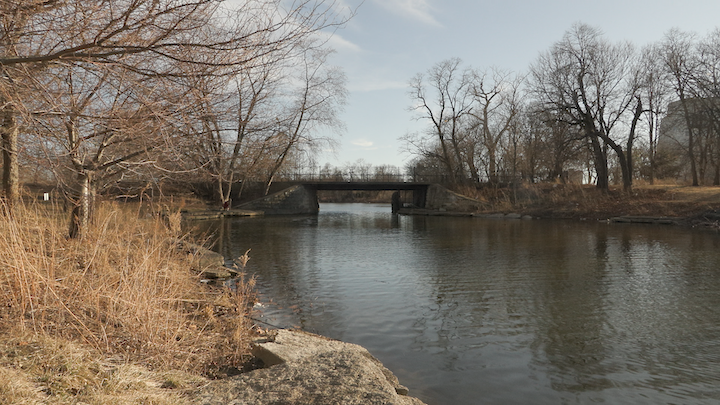
ALMOST ALL THE BUILDINGS WERE TEMPORARY, BUT THE PARK ITSELF REMAINS, INCLUDING OLMSTED’S WOODED ISLAND RIGHT IN THE MIDDLE OF THE PARK.
Eric Rogers: When you look out across one of the lagoons and you’re sort of looking at the graceful balustrades and the staircase up to the museum, you can’t help but think about what it might have looked like when there were dozens of similarly monumental buildings, all over the park.
THE ORIGINAL FERRIS WHEEL WAS AT THE FAIR, TODAY, COMMOMEMORATED BY THE SMALLER ONE ON NAVY PIER. TWO ORIGINAL BUILDINGS REMAIN: THE ART INSTITUTE DOWNTOWN AND THE MUSEUM OF SCIENCE AND INDUSTRY
Dr. Voula Saridakis: But this building, because it was going to be built as the Palace of Fine Arts, they built it with this brick substructure, and that made it pretty strong. And solid. And so when the fair came to an end, all the other buildings were either torn down or they were burned down.
Rogers: It’s also a moment of transformational change for the park with the Obama Presidential Center opening this June. And that’s something that I think has a lot of promise for, you know, attracting people to the park and the surrounding communities.
THE LEGACY OF THE WORLD’S FAIR IN CHICAGO GOES BEYOND JACKSON PARK
Alter: I think the single biggest impact on Chicago in the 21st century is not any of the zippers or the Cracker Jacks or the murders, but on the mythology of Chicago.
THE COLUMBIAN EXPOSITION ENDED 133 YEARS AGO, BUT ITS MARK ON THE CITY IS EASY TO FIND, IF YOU KNOW WHERE TO LOOK.
IN JACKSON PARK, JONAH WHITE, MEDILL REPORTS
Jonah White is a sports specialization graduate student at Medill.