
By Bianca Bryant
Medill Reports
SAN FRANCISCO – In the middle of the Tenderloin district of San Francisco, Kent McCormick isn’t looking to just hand out another brochure or meal, he’s looking deeper to form relationships.
McCormick, the director of restoration initiatives at Youth With A Mission has spent 14 of his 30 years living and working in the neighborhood. From his residence above the community center, he watches over a district he describes as “fundamentally unpretentious” and “the most special place in San Francisco,” despite its reputation for grit.
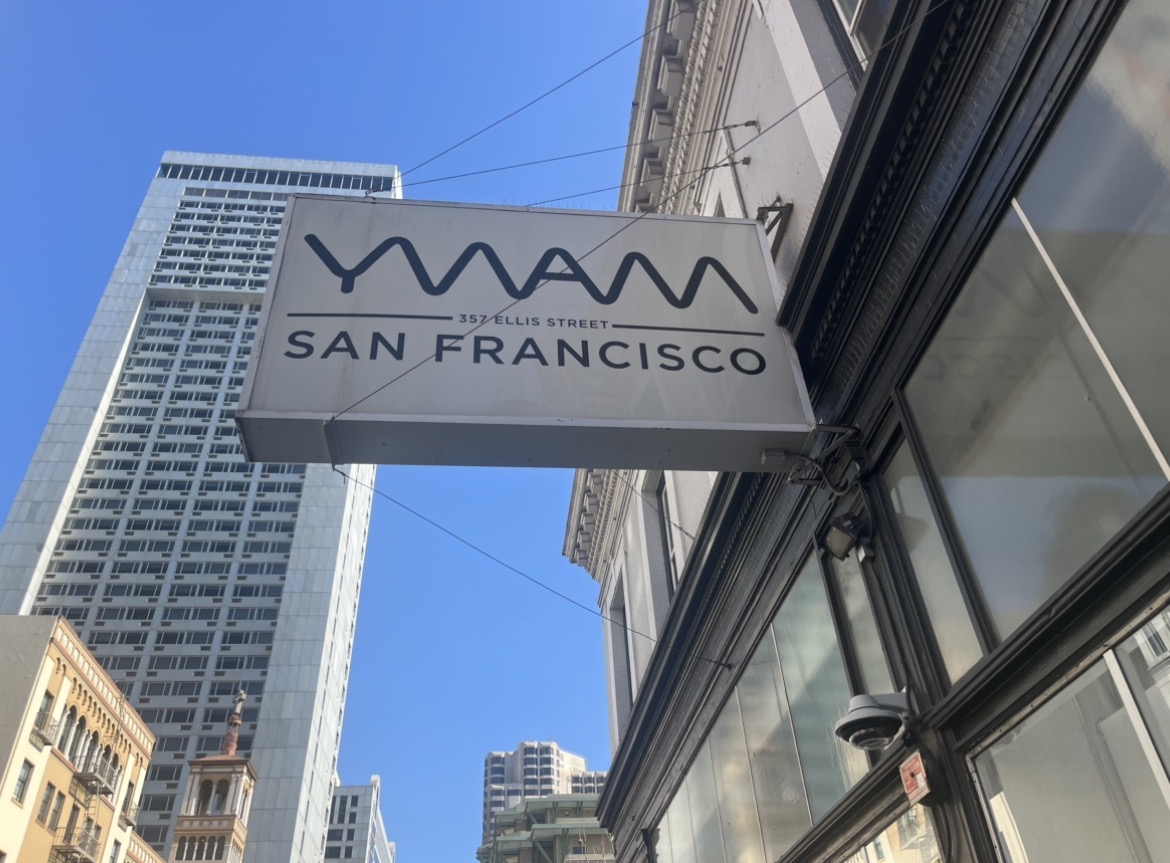
According to the organization’s site, “YWAM San Francisco is a non-profit organization that seeks to engage the city of San Francisco with a loving God by reaching out to each sphere of society in unique, relevant and creative ways.”
“We host a community center to give people a place of peace in the middle of the chaos,” McCormick said. “We’re really focused on relationships over services.”
McCormick said the Tenderloin is home to approximately 36,000 low-income residents and up to 8,000 people experiencing homelessness. While the neighborhood is dense with government-subsidized Single Resident Occupancy buildings and social services, McCormick said the primary struggle isn’t a lack of resources but “relational poverty.”
The nature of the neighborhood’s challenges has turned more lethal in recent years. McCormick noted a drastic shift in the local drug supply, moving from a mix of meth, heroin and cocaine to a market dominated almost exclusively by fentanyl.
“I’ve been serving here 14 years, but I’ve never seen drug overdoses like I have over the last five years,” McCormick said.
The numbers tell a staggering story: In his first five years in the Tenderloin, McCormick saw only three overdoses and never had to administer Narcan. In the past four years, he said he has used the opioid-reversal medication to save nearly 80 people. Just this past Wednesday, he revived a man on the sidewalk in front of the building.
“These are not my clients, they’re my neighbors and my friends,” McCormick said. “It’s hard enough to watch a stranger overdose and die. It’s even harder to watch your friend.”
The impact of YWAM’s people-centered approach is visible in residents like Elizah “Eli” Lane. Lane, who once lived in a tent outside the YWAM building, is now housed in the nearby Windsor Hotel.
For Lane, the center’s appeal is the authenticity of the staff, all of whom are trained in trauma-informed care and verbal de-escalation.
“You can tell right when they talk, they come from the heart,” Lane said. “You get somebody that’s coming from the heart, you’re more apt to listen to him.”
Lane called the new influx of drugs senseless, with fentanyl being more lethal than its predecessors. Lane said many young people are arriving from places like Oregon, seeking cheaper costs of the drug.
Through his relationship with the center, Lane said his temper has decreased and he has re-evaluated his relationship with God since losing his son.
“My son took his life. And I blamed Him,” Lane said. “It took me a long time to get over it. It is hard to believe, it’s something you can’t touch, can’t see, you can’t hear.”
Lane commends the YWAM staff’s commitment to the neighborhood and residents who come in.
“You know, to stay here and put up with this takes a lot of heart,” he said. “Makes you have to believe in God. They got me to start believing.”
As San Francisco continues to adjust to a post-COVID-19 landscape of empty tech offices and shifting mayoral priorities to revitalize downtown, McCormick said YWAM is doubling down on its relational model. Lane highlighted plans to open a recovery home in the coming months with no time limit on residency.
For McCormick, the goal remains to bridge the gap between the beautiful characters of the Tenderloin and the rest of the city.
“You haven’t really experienced San Francisco if you haven’t been to the Tenderloin,” McCormick said. “Practice curiosity over assumption. When you sit with people and you hear their stories, you realize like, ‘Oh, this person’s actually not that different from me.’”
Bianca Bryant is a sports media specialization graduate student at Medill.