
By Ellie Fideli
Medill Reports
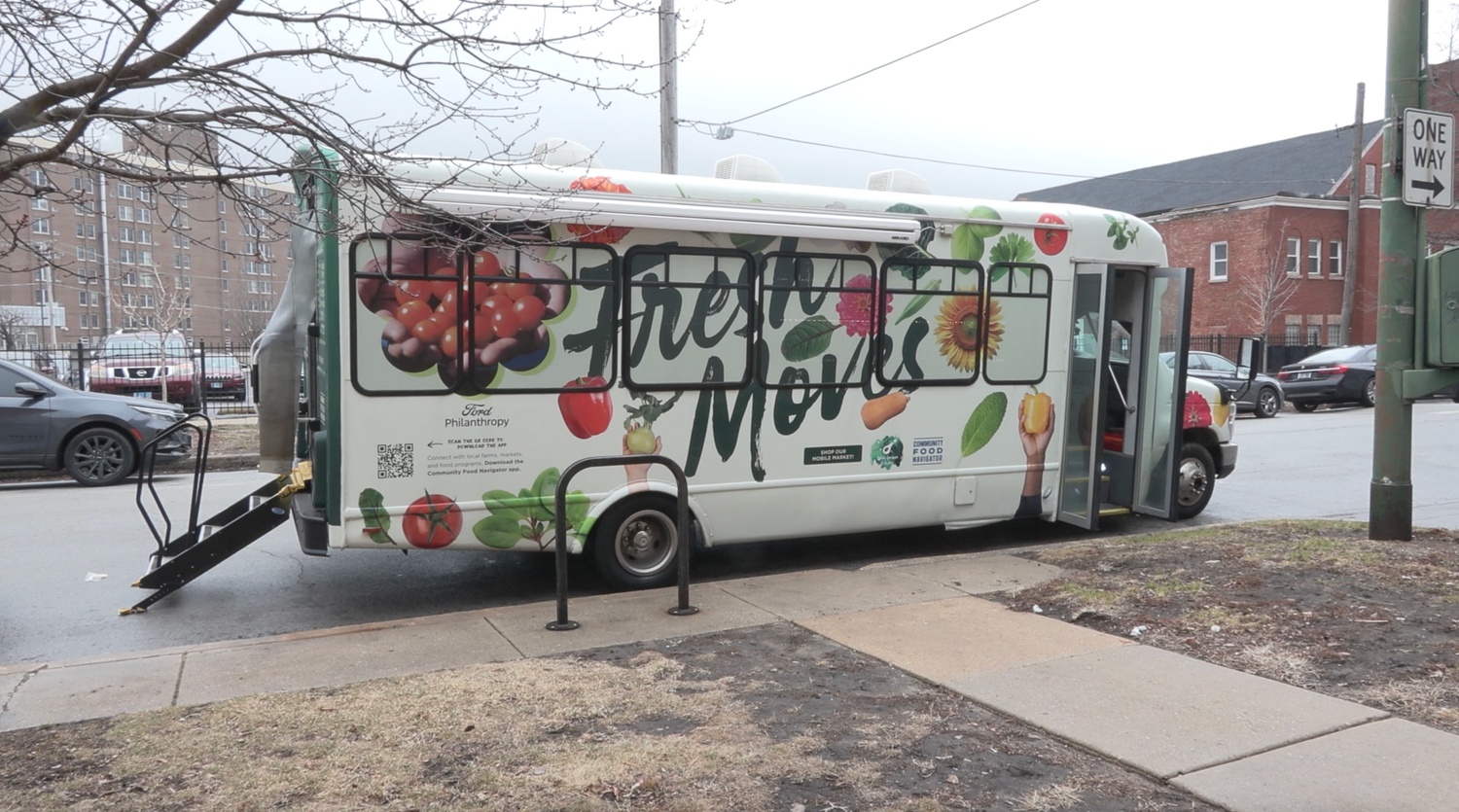
More than 17 million people in the U.S. live under “food redlining” — that is, they lack nearby access to fresh, healthy groceries. In Chicago, the Urban Growers Collective uses a “produce aisle on wheels” to deliver high-quality fruits and vegetables directly to divested neighborhoods like South Chicago. Residents and staff emphasize these mobile markets provide essential nutrition to communities otherwise dominated by unhealthy fast food options. Another grassroots initiative comes out of Thayer Academy near Boston, where students learn to grow food in controlled environments.
TRANSCRIPT:
NARRATION: Grocery stores such as Aldi, or Jewel Osco, or Whole Foods might seem normal in many neighborhoods. But, according to the U.S. Department of Agriculture, an estimated 17 million people live in areas where access to fresh and healthy foods is a sight unseen. These “food redlining zones,” or, more commonly known as “food deserts,” aren’t just in rural America — they are prevalent in some of the country’s most populated cities, as well.
DANIEL BLOCK: Brown neighborhoods, especially predominantly Black neighborhoods, in the ’30s and ’40s, were redlined, you know, areas that have not received retail investment, in this case, particularly grocery stores. Over a long period of time, a lot of stores are closed.
NARRATION: Local organizations are stepping in to help. The Urban Growers Collective is closing the food access gap, using their “produce aisle on wheels” to bring fresh food to divested neighborhoods such as South Chicago.
DIONTRICK TURNER: We like to choose a wide range of fresh produce, simply for the fact that food deserts don’t have access to good food. It’s more accessible to get fast food or unhealthy products for you in these food deserts and the communities we serve. So, I feel like it’s needed to have greens, vegetables, fruits — all the things that the human body is deserving of.
NARRATION: On the bus you can find potatoes, strawberries — and even recipes bringing high-quality food to these communities.
CHARLES PHILLIPS: It’s nice. I think, you know, seeing people enjoy the food that we bring on this bus is deeply meaningful and impactful. It means that we’re doing good work. It means that we’re not only selling food, but we’re making an impression and connections in the community.
NARRATION: And South Chicago residents truly appreciate the mobile mart.
LILY CERRANTOS (translated from Spanish): How should I even begin to say it? It is almost like the warm light is patiently waiting for me with something incredibly fresh and exciting that I have never seen before.
NARRATION: While the mobile mart helps combat food deserts in Chicago, this issue is nationwide.
SKIP SCHNEIDER: So many people just don’t have access to good food. I mean, the health crisis, it’s just a disaster, unfortunately.
NARRATION: Meet Skip Schneider, a science teacher and sustainability coordinator who is educating the next generation of students about food insecurities in the greater Boston area at Thayer Academy.
SCHNEIDER: Our plan is to grow some food. Basically, it’s like science. Kids can run experiments out there, learn about the whole process. Then we’re also going to grow food for our kitchen. The third one is anything extra we’re going to give away to local food pantries.
NARRATION: And this type of farming can be done anywhere.
SCHNEIDER: You can grow food without sunlight, without, you know, it doesn’t matter about temperature, like, you could drop this thing in Antarctica, and they could have fresh food down there.
NARRATION: From mobile markets in Chicago to student-run farms in Boston, the movement to end food deserts is growing, and the potential for a ‘fresh’ future might be within reach for these communities. Reporting in Chicago: Ellie Fideli, Medill Reports.
Ellie Fideli is a Sports Media specialization graduate student at Medill.