
By Justin Parmer
Medill Reports
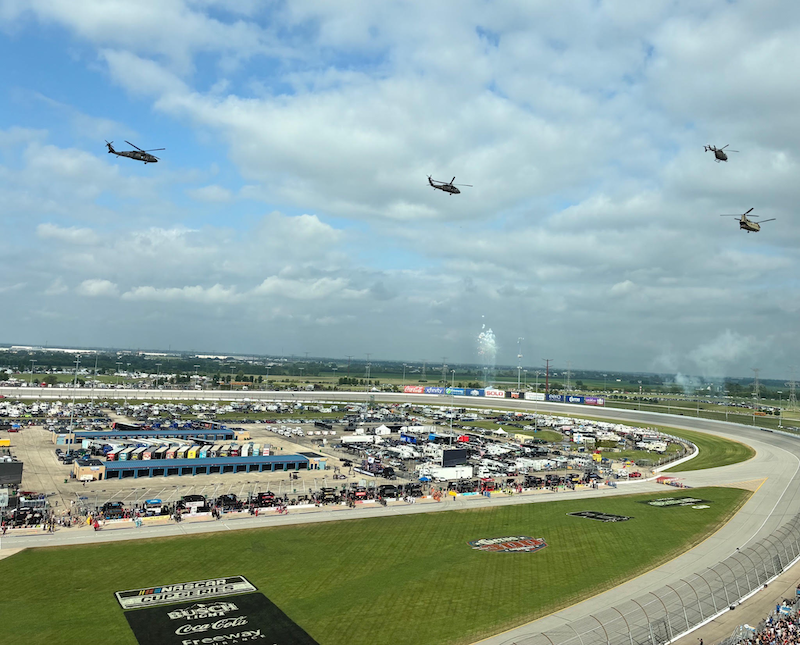
JOLIET, Ill. — What was once an unlikely reunion is now a reality. NASCAR returned to Chicagoland Speedway last weekend, making its first visit to the track in seven years and culminating in the 4th of July weekend’s eero 400.
The track put on a show worthy of the wait. The original asphalt of the never-repaved Joliet-based track produced exactly what the racing fans hoped for, with the worn surface creating multiple grooves around the 1.5-mile oval, resulting in a track-record 28 lead changes among 13 drivers in front of a sellout crowd and culminating in a Chase Briscoe victory.
“I thought that was about as good as you could get,” Briscoe said in his victory interview. “The cat-and-mouse game, and we were slipping and sliding around. Hopefully you could see it on TV. So excited to be back in Chicagoland.”
The intermediate track, which opened in 2001, hosted 19 Cup Series races before NASCAR cut it from the schedule in 2020 because of the COVID-19 pandemic. NASCAR continued to skip the track in the following years, favoring the Chicago Street Course in Grant Park, which ran downtown from 2023 to 2025. But strong fan interest in racing at other intermediate tracks, combined with the lack of a deal to renew the Street Course in time for 2026, brought Chicagoland Speedway back to NASCAR’s calendar this year.
“We have a great facility here,” said Bubba Wallace, driver of the No. 23 23XI Racing Toyota. “Never knew the reason why we stopped coming here.”
Despite sitting mostly dormant for seven years, the track held up well against Chicagoland’s harsh weather, though a few spots showed wear. Track officials repaired part of pit road during the stage one caution, which kept the race under caution longer than normal.
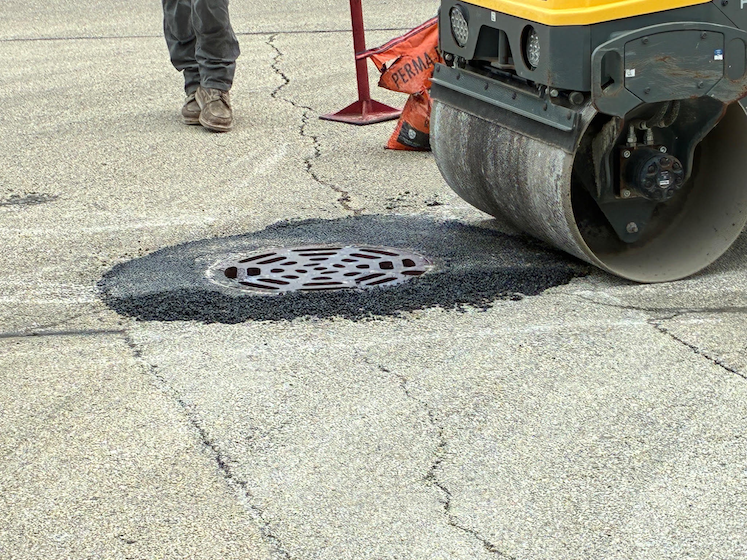
The Cup garage also needed repairs during the weekend, with crews patching a drain lip twice to prevent splitter damage to the Next Gen car. Even with the inconveniences, several drivers credited track staff for the facility’s overall condition, including Carson Hocevar, who documented Chicagoland’s condition a year ago, before NASCAR announced the track’s return.
“They did a pretty good job with the weed eating and everything, but honestly, it was in really good condition,” said Hocevar, driver of the No. 77 Spire Motorsports Chevrolet. “Just needed a little bit of a facelift or a nose job, per se. Didn’t need a full rework here.”
Drainage problems around the facility caused the biggest headaches. Three consecutive days of heavy downpours turned the ground into a swamp for both fans and cars. Crews and fellow fans had to help pull many drivers out of inches-deep mud in the grass parking lots on July 4, and some fans abandoned their cars there overnight.
The storms forced the track to call several audibles for July 5’s race, diverting most parking to the adjacent Route 66 Raceway and moving pre-race ceremonies from the frontstretch grass to the garage area.
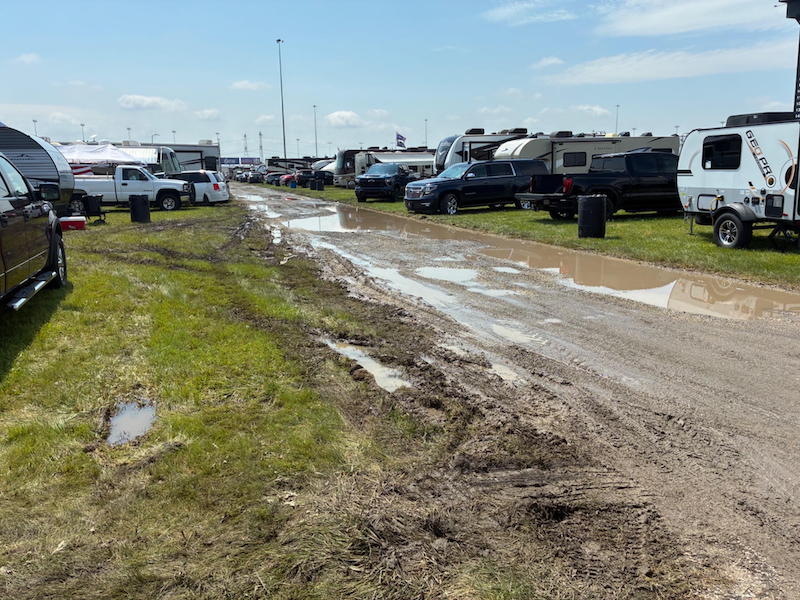
Heavy rain is nothing new for NASCAR in the Chicagoland market. Weather impacted several races in the 2010s at Chicagoland Speedway, including the track’s final two visits before its seven-year absence. Weather also had an impact on all three years of racing at Grant Park. But fans who returned to camp in the infield said the mud is simply part of the experience.
“Everyone’s always getting stuck in mud, but it’s really good vibes,” said Joy Damico, who spent the weekend camping on the backstretch in an RV. “We know it’s gonna be dirty, it’s gonna be muddy, but it’s still awesome.”
The camping and grandstand experience marks just one cultural difference between the two Chicago-area tracks. According to Chicagoland Speedway General Manager Jacque Herrera said only 5% of tickets sold at Chicagoland Speedway came from fans who also attended the Street Course. Many fans said the Street Course and the speedway share little beyond the city’s name and the NASCAR banner, representing a broader cultural divide.
“The clientele doesn’t want to take the Metra out to go watch a race when you can’t tailgate,” Damico said. “This seems more accessible to all people, where when it’s downtown, it’s a little bit harder for people to reach sometimes. The accessibility is a huge difference.”
Despite the approval from fans, drivers and owners, the speedway’s long-term future remains uncertain. The track sent renewal emails for both grandstand and infield tickets, but that doesn’t confirm whether Chicagoland Speedway will return to NASCAR’s calendar in any of its three national touring series.
Selling all 47,000 grandstand seats will help the speedway’s case for a permanent date, but multiple outlets have reported NASCAR is in advanced talks with the city of Chicago to return to the Street Course, with an estimated date the week after Memorial Day.
While a Street Course return wouldn’t necessarily mean Chicagoland’s departure, NASCAR has other tracks to weigh for 2026 and beyond. The 36-race points schedule already includes 26 other tracks, such as the Coronado Naval Base, along with several tracks that don’t currently hold points dates, including Dover Motor Speedway and the Autódromo Hermanos Rodríguez in Mexico City. NASCAR could also shift a date away from one of its owned tracks that currently holds two dates, like Darlington, South Carolina, or Kansas City, Kansas.
Regardless of how the schedule shakes out, last weekend’s reunion showed genuine interest in keeping NASCAR at Chicagoland Speedway, proving the track can still deliver great racing and lasting memories despite its seven-year absence.
“It’s hard to leave a track like this, that’s got some wear on it, some character, off your schedule going forward,” said Denny Hamlin, driver of the No. 11 Joe Gibbs Racing Toyota and co-owner of 23XI Racing. “I appreciate Ben [NASCAR chief operating officer Ben Kennedy] and his team putting it back on the schedule after all these years.”
Justin Parmer is a sports media specialization graduate student at Medill.