
By Emma Henry
Medill Reports
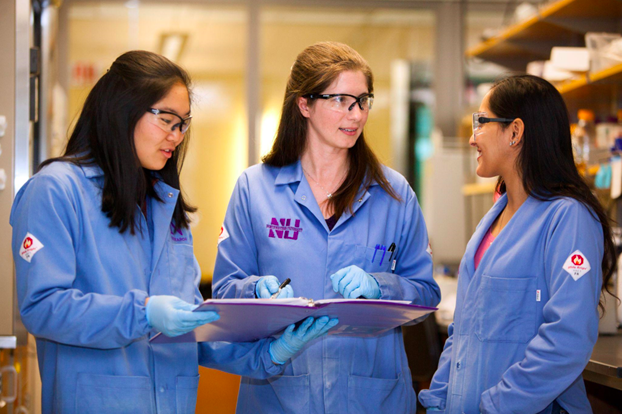
At Northwestern University’s Center for Synthetic Biology, scientists are re-engineering one of life’s most fundamental building blocks: the cell. Instead of relying solely on living cells, researchers are experimenting with artificial ones, allowing scientists to study the potential for these designed biological systems to perform specific tasks. While everyday applications are years away, this ongoing research could one day transform the way scientists detect disease and deliver drugs to the immune system.
Artificial cells look much like regular, living cells, but they allow scientists to program their responses and activities. Unlike living cells that can respond in unexpected ways, these artificial cells contain limited biological machinery, allowing researchers to test a single function without the complexity of living organisms.
Northwestern professors Neha Kamat and Danielle Tullman-Ercek, a co-director of the CSB, said their artificial cell research could create new therapies or testing mechanisms for disease.
“We’re at an exciting point for artificial cell work because a lot of people have grown frustrated with biological cells. You have to keep them alive, and there are a lot of safety and security concerns about using them in different places,” Kamat said. “There’s interest in thinking about how we can port those lifelike functions into different forms and new environments.”
Synthetic biology blends principles of engineering and biology to design or modify organisms for new, more useful applications. At the CSB, this has meant developing biosensors to detect contaminants in water, researching sustainable biochemical production, such as using Clostridium autoethanogenum, a bacterium that naturally transforms carbon monoxide into ethanol, to minimize reliance on fossil fuels.
Artificial cells are less durable than living cells, said Kamat, typically lasting hours rather than days. That shorter longevity presents challenges but also advantages, Tullman-Ercek said, including greater control of their movement and function and a reduced risk of unintended evolution.
“Artificial cells won’t be programmed to grow and divide. They’ll be programmed just to do the job,” she said.
This simplicity makes them particularly appealing for medical applications. In the future, they could be used as biosensors capable of detecting chemical signals in the body. In practice, this could mean injecting artificial cells that act like diagnostic devices, circulating through the body, and recording biological signals. Patients could then take at-home tests, such as a urine sample, to reveal what the cells detected, like cancer proteins or inflammation markers often associated with heart attacks.
Fifth-year Ph.D. candidate Mary Kelly, a student in Kamat’s lab, said biosensing could “enable more accessible, continuous and personalized health sensing technologies.”
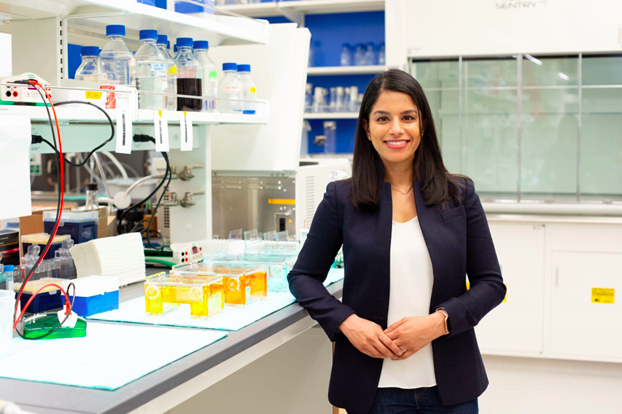
Artificial cells could one day be designed to carry vaccines or medications and release them when specific conditions are met. Unlike traditional delivery systems, these structures could make decisions based on environmental cues, like signals from the immune system, allowing for more precise treatment of chronic illnesses. Tullman-Ercek describes this mechanism as similar to devices used to help diabetics that can sense insulin levels and deliver medication only when needed.
Kamat said another possible application beyond internal therapies is “smart” bandages embedded with artificial cells that could monitor the stages of wound healing and tailor care as needed.
Artificial cell applications could also address the issue of cost in modern medicine, Tullman-Ercek said. Many advanced therapies for chronic illnesses are biologically based, which makes them expensive to produce and distribute. Synthetic alternatives could offer more accessible options with similar results, she said.
The challenge now is figuring out how to direct cells to complete these applications practically.
“They’re like if you took a car and you stripped it apart and put together a go-kart,” Kamat said. “You still need a driver, and we haven’t figured out how to put the driver in the car yet.”
Artificial cells present other hurdles as well. They are foreign to the body, so the immune system may remove them before the cells complete their intended function. Scientists are also thinking about unintended consequences, including the possibility of making them too lifelike.
“We continuously think about the broader societal impacts of the systems we develop. At present, artificial cell technologies are still far from truly mimicking living systems,” Kelly said. “However, as the field advances, thoughtful regulation and responsible innovation will be essential to ensure these technologies are developed and applied safely and ethically.”
A large part of the gradual nature of this research is to account for ethical implications. Kamat describes the work as “slow progress … but exciting progress.”
Rather than following a clear roadmap, progress often involves failure and reassessment, a conscious effort to balance scientific innovation with responsibility. For Tullman-Ercek, this requires a different way of thinking, often from scientists and non-scientists alike – one that blends scientific expertise with imagination.
“I never thought I was creative, I don’t produce works of art, but I do produce solutions and that takes creativity too,” Tullman-Ercek said. “We’re trying to learn things that no one has ever learned before, and that’s hard. Hopefully, people are inspired to solve these problems.”
Emma Henry is a health, environment and science specialization graduate student at Medill.