
By Antony Terence
Medill Reports
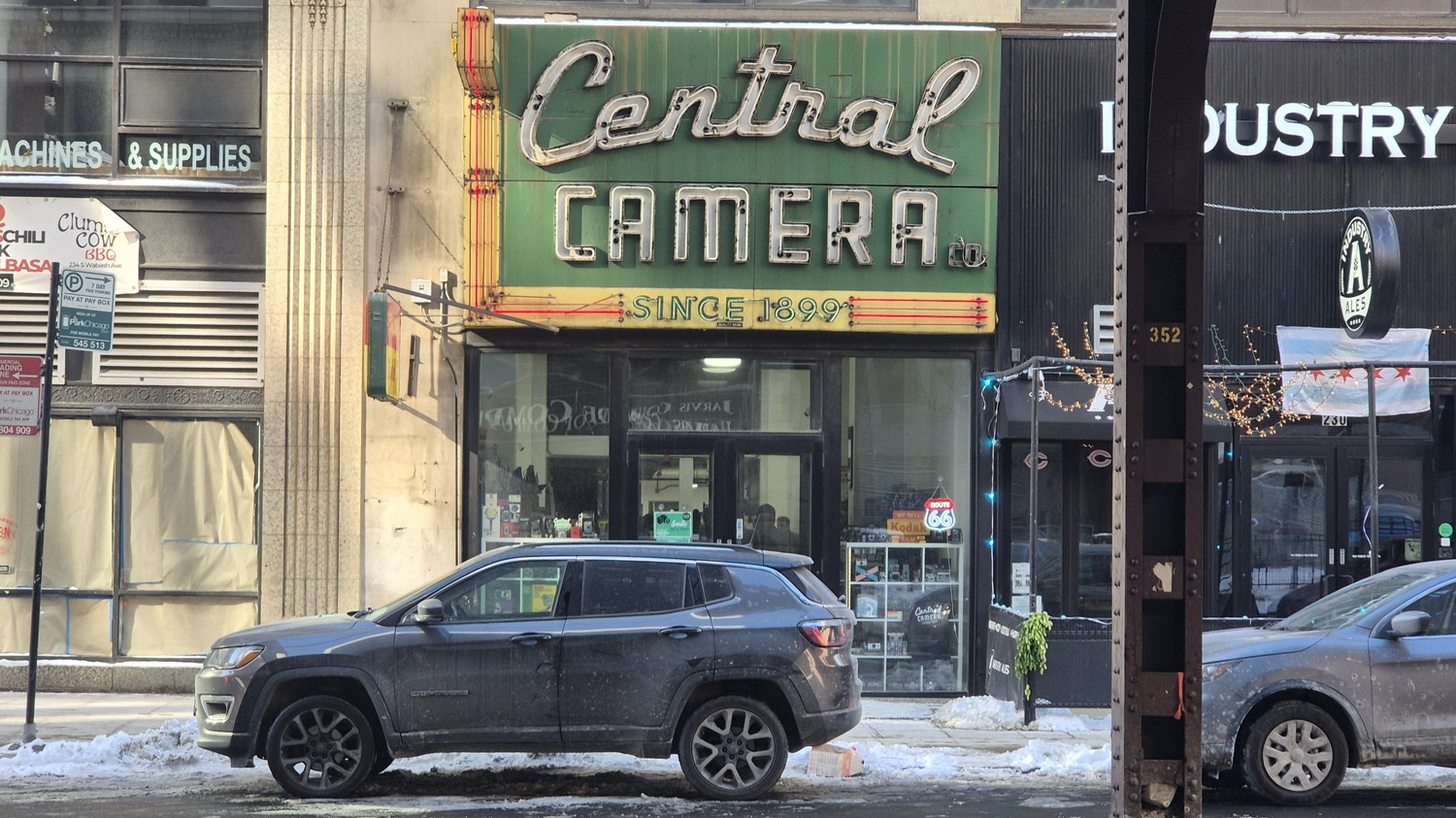
Anastasia Khoubaeva, who sells cameras at Central Camera, Chicago’s oldest camera store, points to rows of Canon PowerShots and Kodak PixPros on sale.
“These will be gone by the end of next month,” Khoubaeva said.
As she shows visitors a Sony Cyber-shot, Khoubaeva said she thinks old-fashioned models are growing in popularity with people who want to avoid constant social notifications.
“I have over 83,000 photos on my phone that I haven’t bothered to check,” she said.
Bad Bunny’s Super Bowl halftime show earlier this year rocked hits from “Debí Tirar Más Fotos” (“I should have taken more photos”), the Puerto Rican rapper’s latest album and a tribute to moments of resistance. But a growing number of obsessive picture-takers are talking about the joy in taking fewer images. Researchers are finding that snapping too many shots of sunsets and concerts may even harm your recollection of them.
In a study published in 2022, Julia S. Soares, an assistant professor of psychology at New Mexico State University, found that the more photos participants took of a subject, the more impaired their memories of said object were.
“If you only have one photo instead of a hundred, it gives you more to do with your mind than your eyes,” Soares said. “When people take photos, they want an episodic recollection, where they feel like they’re reliving the event.”
When smartphones grew in popularity, digital cameras nearly went extinct, with Japan’s Camera & Imaging Products Association reporting 1.7 million with built-in lenses sold in 2023, down from 109 million in 2010. That number rose to 2.44 million in 2025, which, while a far cry from previous decades, points to a resurgence in interest.
Could this be attributed to a desire for more intentional photography? There may be an answer in Soares’ exploration of the photo-taking impairment effect, first introduced in Linda Henkel’s 2014 paper in Psychological Science.
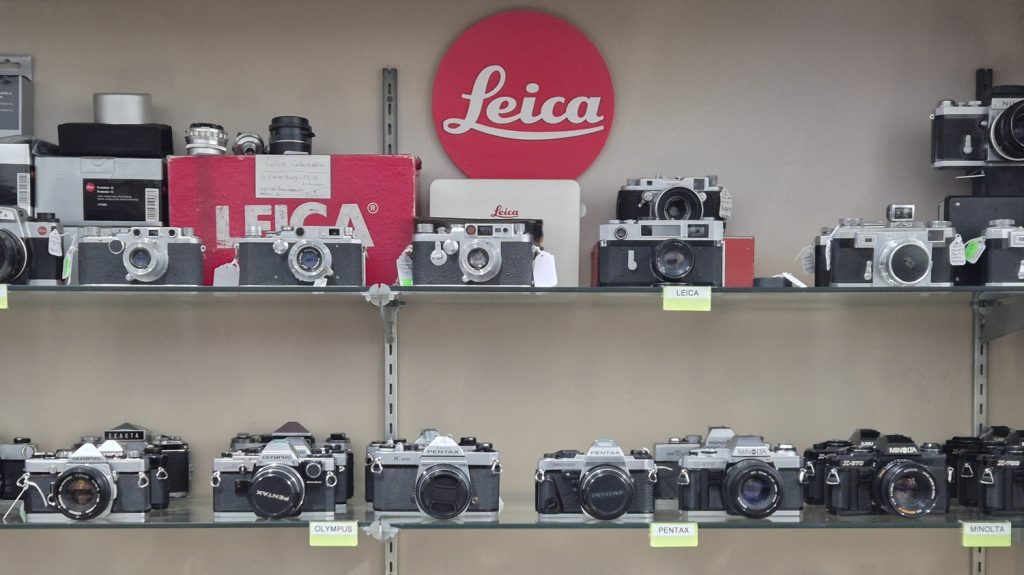
Among the neatly ordered cameras on display, Khoubaeva said Canon’s PowerShot G7 X Mark III (2019) and SX740 (2018) models were the most popular. The manufacturer is taking notes, launching a 30th anniversary edition G7 X for $1,299 this April that quickly sold out.
“Driven by strong demand, sales of compact cameras doubled (in financial year 2024-25) due to increased supply through the further expansion of production,” the company noted in its 2025 report shared with investors.
Canon re-released the PowerShot SX740 HS Lite in 2024, with features nearly identical to the original SX740 HS. Despite its lack of a touch screen, it outsold the brand’s latest PowerShot IXY 650 across Japan’s Yodobashi Camera stores last November.
“After smartphones took over, 80% of our store visitors were serious buyers, as opposed to 40%-50% earlier,” said Sathianarayan Kaithot, who spent 25 years as a showroom manager at Canon Middle East. “Tourists love the SX740 since it’s a lightweight camera with good zoom on a budget.” Released at $399, it now costs $749 at Central Camera.
Professional photographers are also noticing this shift toward compact cameras.
“Gen Z is so fascinated with all things vintage and analog that it’s like a return to form,” said Ken Yotsukura, a New York-based photographer whose work has appeared in People, Vogue and The New York Times. “I have people asking me all the time, ‘What camera should I get?’”
Yotsukura said he owns four cameras and switches between them depending on where his shoots are scheduled. At weddings, he sees officials asking guests to put their phones down after giving them 10 seconds to take pictures. He wants guests to take in the moment and worries about a bigger threat: generative artificial intelligence.
“I’m terrified that one day, we’re going to be cool with AI-generated wedding shoots,” he said.
“At my wedding, we told people not to take photos because we didn’t want to look back and just see a bunch of phones,” said Lucas Pandolfo, a filmmaker and adjunct professor at the Paris College of Art. He found it ironic, as someone who’s spent six years teaching digital media.
“I talk about iPhone photography in class, but I still think fewer devices should have cameras,” he said.
A roll of film typically costs $10-$20, giving old 35mm film cameras a cost per image that forces intention, Pandolfo said. With smartphones, he said, “We generally don’t weigh the consequences of taking an image.”
“If you want to remember a grocery list or something at a store, it costs nothing to take a picture, and maybe you never look at it again,” Pandolfo said.
Kristin Taylor, the curator of academic programs and collections at Chicago’s Museum of Contemporary Photography, said she likes to see picture-takers slow down to embrace the craft and mystery of not knowing what photos could turn into.
“There’s something magical about photography that’s being lost with people taking so many photos,” she said.
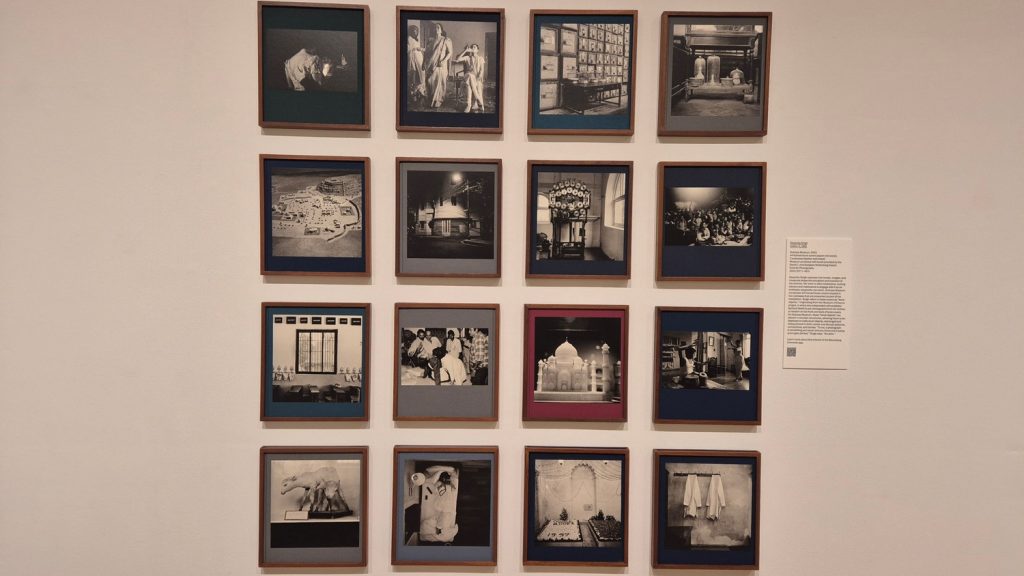
The museum’s latest exhibition, “Collecting Through the Decades,” reminds visitors of the conversations that photography engages in, from politics to culture. Today, many people think first about how pictures would look on social media versus how they felt, Taylor said.
Capturing a mental picture instead of a flurry of images on an iPhone is easier said than done. But changing this behavior is possible. Yotsukura’s mantra: “Just take a photo and put your phone down.”
Antony Terence is a magazine specialization graduate student at Medill.